
Basketball is a universal language, but the dialect changes from continent to continent. From the high-paced flash of the U.S. to the methodical precision of Europe, each region brings a unique identity to the hardwood. As the game becomes more global, understanding these international playing styles is critical for evaluators, coaches, and fans alike.
Here’s a deep dive into how basketball is played across China, Australia, Europe, and Africa, and what makes each region’s approach distinct.
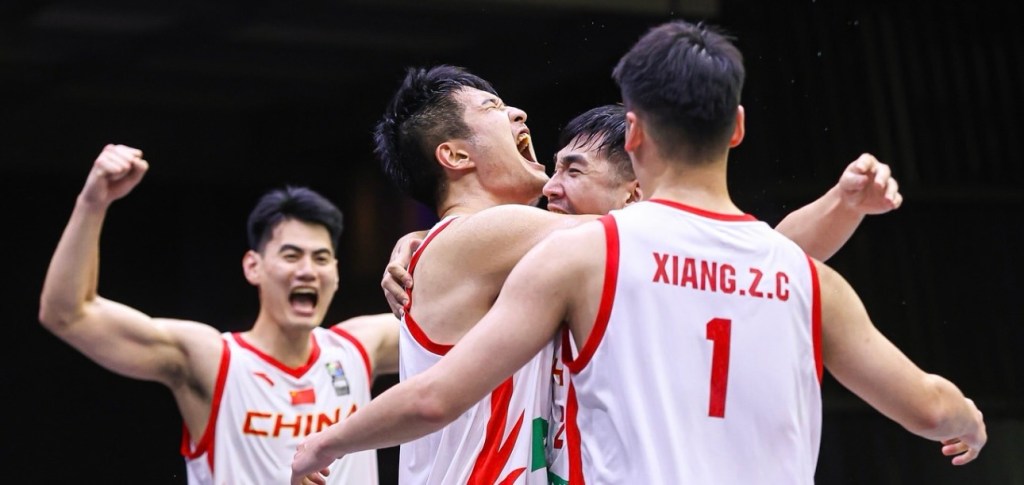
🇨🇳 China — Structured Systems and Star Reliance
Style Summary:
Chinese basketball is defined by structured half-court offense, heavy use of set plays, and a tendency to build around a singular star player. Teams often prioritize discipline, spacing, and mid-range shooting.
Notable Traits:
- Less improvisational than Western styles
- Bigs are traditionally emphasized in offensive sets
- Defensive schemes focus on team rotations over individual defense
- The pace is moderate, rarely run-and-gun
Modern Shift:
With NBA influence growing through players like Yao Ming and Zhou Qi, China has started to embrace more pick-and-roll action, stretch bigs, and three-point shooting — but the foundation remains heavily system-based.
🇦🇺 Australia — Grit, Versatility, and Two-Way Toughness
Style Summary:
Australia is known for producing rugged, fundamentally-sound, two-way players. Aussie basketball culture emphasizes team-first ball, switchable defenders, and physicality without sacrificing skill.
Notable Traits:
- Players are trained early in positionless basketball
- Emphasis on defensive grit and strong perimeter play
- High basketball IQ and elite decision-making
- NBL (National Basketball League) imports athleticism and shot creation, blending American flair with local toughness
Influence:
The success of players like Patty Mills, Josh Giddey, and Dyson Daniels reflects the country’s strength in developing smart guards who can adapt to various systems.
🇪🇺 Europe — High IQ, Skill Over Athleticism, and Tactical Mastery
Style Summary:
European basketball is the gold standard for tactical sophistication. Teams prioritize ball movement, spacing, and execution over isolation and individual dominance.
Notable Traits:
- Heavy use of horns sets, pick-and-pop, and motion offenses
- Bigs are skilled — often capable of shooting, passing, and handling
- Defense is compact and emphasizes rotations and angles
- Players are well-coached, with a deep understanding of team concepts
Regional Variations:
- Spain: Fast pace, guards who can score and facilitate
- Serbia/Lithuania: Strong post play, physicality, elite fundamentals
- France: Athleticism, shot-blocking, and guard creativity (e.g., Wembanyama, Fournier)
- Turkey/Greece: Slower tempo, passionate environments, physical defense
Why It Matters:
Europe produces stars like Luka Dončić, Nikola Jokić, and Giannis Antetokounmpo by focusing on skill developmentfrom a young age, often ahead of raw athleticism.
🌍 Africa — Athleticism, Raw Potential, and Emerging Structure
Style Summary:
Africa is basketball’s sleeping giant. The continent is rich with raw athletic talent, long-limbed defenders, and players with natural instincts. However, the challenge has historically been infrastructure and coaching resources — though that’s changing rapidly.
Notable Traits:
- Players are long, explosive, and physical
- Rim protection and rebounding dominate in early development
- Less structured offensive play, but improving through academies like NBA Academy Africa, SEED, and BAL (Basketball Africa League)
- Many African-born players refine their skills abroad, especially in Europe or the U.S.
Emerging Potential:
The recent rise of talents like Joel Embiid (Cameroon), Serge Ibaka (Congo), and Jonathan Kuminga (DR Congo)shows the continent’s growing influence.
Key Developments:
- BAL is building pro infrastructure
- NBA Academies are teaching modern skills, offensive systems, and mental training
- Increased scouting from overseas clubs and agents
🧠 Bringing It Together: Why Global Styles Matter
For scouts, evaluators, and fans, understanding these cultural basketball identities is vital. A European prospect might lack raw speed but bring NBA-ready poise and vision. An African big man might need polish, but could offer elite athletic upside. An Australian guard may not wow with highlights, but his defensive IQ and toughness will show up in playoff moments.
For Coaches:
Knowing where a player comes from isn’t just about nationality — it’s about their basketball DNA.
 Unit 1 Hoop Source