
LAS VEGAS — At this year’s Mountain West Conference Media Day, one thing became clear: the state of the game is shifting, and coaches across the league are adjusting in real time. While much of the national conversation centered on the return of G League players bouncing back to college basketball under new eligibility rules, the underlying message that echoed through the ballroom was far more fundamental.
From veteran head coaches to first-year leaders, the tone was consistent — defense, continuity, and chemistry will separate contenders from pretenders this season. You could hear it in the cadence of their voices and see it in the way programs are recalibrating. The focus isn’t on headlines or hype — it’s on execution, trust, and consistency in the smallest details that win games in March.
For Unit 1 Hoop Source, the takeaway wasn’t about the noise around eligibility reform or NIL headlines. It was about the coaches quietly doubling down on identity. The Mountain West, one of the nation’s premier mid-major conferences, continues to set the standard for disciplined, well-coached basketball — and this media day proved it again.
As we walked the floor, talking to programs fine-tuning their systems and redefining roles, the theme remained crystal clear: this year’s Mountain West isn’t just about talent — it’s about teams who defend, connect, and commit to the process.
Boise State: Leon Rice and the Culture of Consistency
When you sit down with Boise State head coach Leon Rice, you immediately sense a program that knows who it is. Despite losing several key pieces from last season, Rice isn’t dwelling on what’s gone — he’s focused on what’s returning and what’s growing.
“I feel good about the pieces we have coming back,” Rice said when asked about the foundation of this year’s roster. When I followed up by asking what will define their success in 2025, his answer came quick: “Play together.”
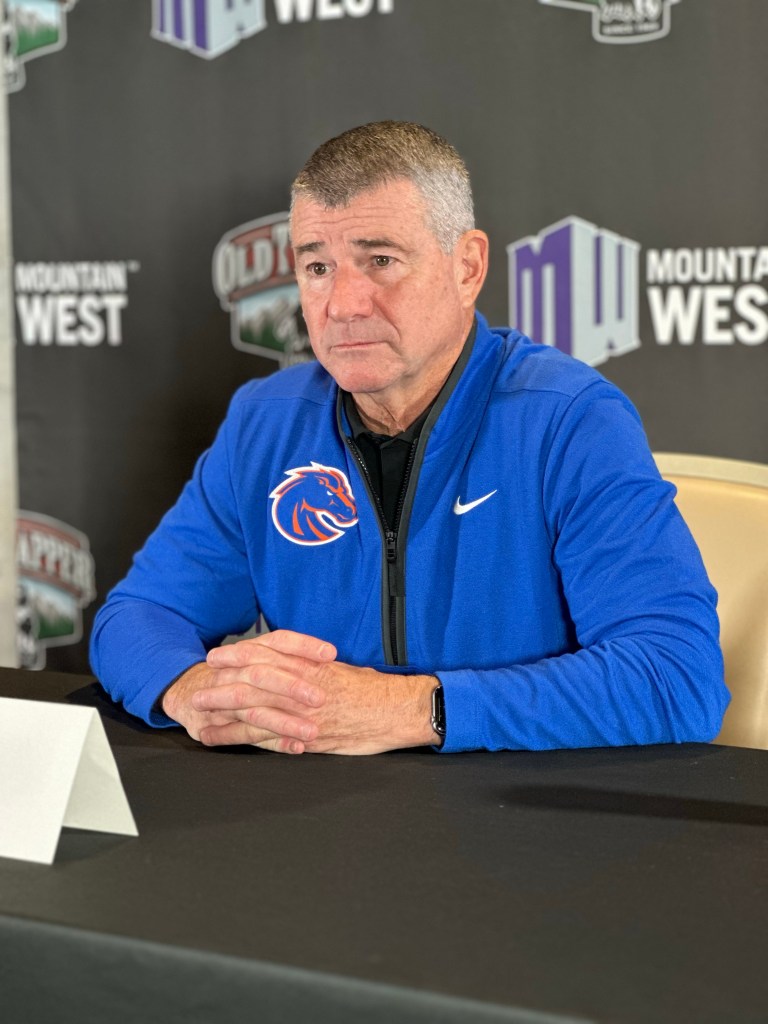
It wasn’t a cliché — it was a reflection of a standard. Rice noted that his best teams over the years have shared one common trait: they’ve played for each other. And this season, he believes that identity can take shape again, thanks in part to a freshman group that’s made major strides.
He spoke proudly about their development: “Our freshmen have grown from the summer to the fall — and they’re quick learners with a high basketball IQ.” That, he said, is what gives him confidence in the group’s chemistry and adaptability as the season approaches.
At today’s Mountain West Media Day, Rice distilled his philosophy into one defining word — consistency. The Broncos don’t just talk about it — they live it. From how they rebound to how they prepare daily, it’s the backbone of the program’s DNA.
Last season, Boise State ranked No. 1 in the nation in defensive rebounding percentage (~80%), a stat that perfectly encapsulates their culture: discipline, detail, and effort over flash. That number isn’t an anomaly — it’s an identity.
Boise State basketball has built its foundation on defense, discipline, and togetherness, and under Leon Rice, those principles continue to be non-negotiable. As the 2025 season looms, the Broncos once again look poised to prove that consistency isn’t just a buzzword — it’s a blueprint.
UNLV: Re-connecting Past to Present — Josh Pastner’s Culture Reset
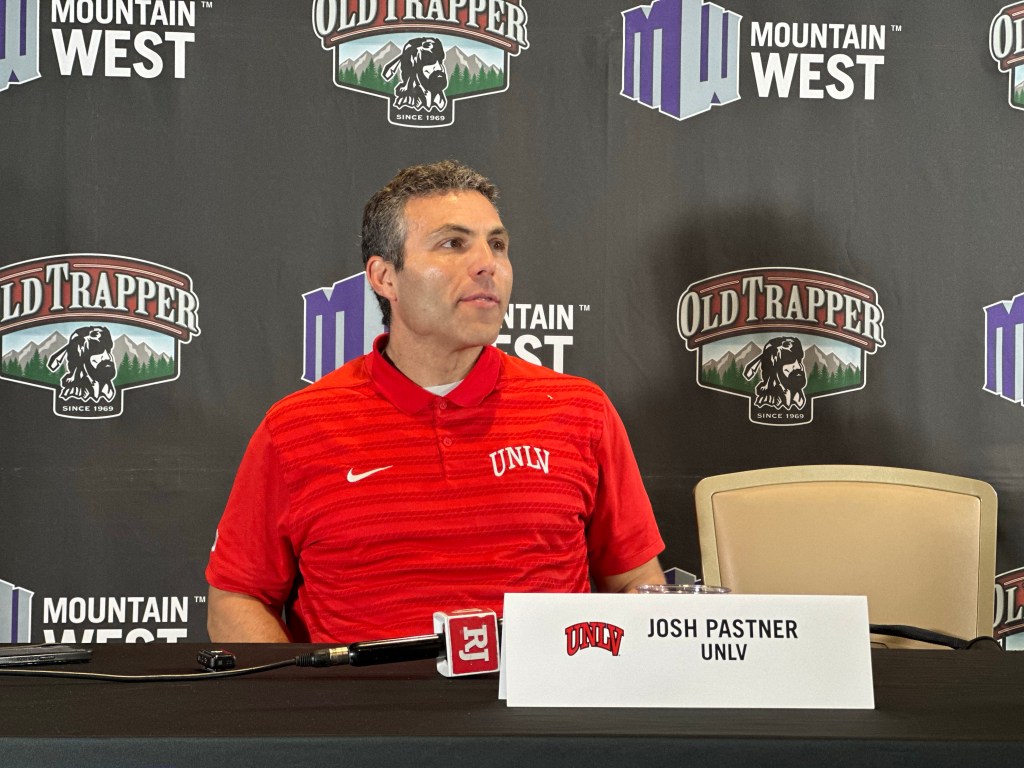
At this year’s Mountain West Conference Media Day, Josh Pastner returned again and again to a theme he believes will define his first full season in Las Vegas: culture, continuity and winning the margins. He framed it simply — “this is Las Vegas’ team,” not his team. Las Vegas Review-Journal+1
“We want to be a hard-nosed, gritty team that just plays basketball,” he told reporters. Las Vegas Review-Journal
“I said from the very beginning that I’m here as the gate-keeper to try and keep the program moving forward.” Las Vegas Review-Journal
Re-connecting the Past
A key part of Pastner’s game plan is mixing the current roster with the program’s legacy — he made a strategic move by bringing former UNLV standout Stacy Augmon into the fold. The idea: have players who lived the winning standard around the current squad. As Pastner said, building an environment where players understand what it takes to win at a high level is non-negotiable.
The Margin Game
Pastner spelled out three measurable areas where the Rebels must improve if they’re to contend: offensive glass, creating turnovers, and taking care of the ball. In his words:
“Winning the margins … it’s a possession game.”
This is no empty slogan. The Rebels’ 2024-25 stats showed a rebounding margin of –1.3 per game and a points-off-turnovers figure at 13.8 PPG. University of Nevada Las Vegas Athletics Pastner clearly wants to flip those numbers, starting with culture and execution.
Pace, Energy, and Home-Court Intensity
At Media Day, Pastner doubled down on pace: “pace, pace, pace” became his rallying cry. Las Vegas Review-Journal The ask? Speed the game, push defensively, rebound aggressively, and restore the home-court edge at the Thomas & Mack. No more “virtual morgue” atmosphere. The Rebels want fans back, engaged, under the assumption that every possession matters.
What It Means
For UNLV, this isn’t a simple rebuild — it’s a re-awakening of identity. Pastner’s messaging suggests he has anchored the program on:
- Acknowledge and leverage the program’s past greatness.
- Set clear performance benchmarks: offensive rebounds, turnovers forced, care of the ball.
- Emphasize possessions as the currency of momentum and wins.
- Rally the home-base — make the venue a fortress again.
If Pastner’s talk translates into execution, then the Rebels’ narrative will shift from “under construction” to “under siege.” At Media Day, the bones of that shift were laid clear — now it’s on the floor to make the promise real.
Colorado State: Farokhmanesh Installing Identity Through Continuity & Spacing
At this year’s Mountain West Conference Media Day, Ali Farokhmanesh didn’t shy away from laying out his blueprint for the Rams’ next chapter. With eight new players on the 2025-26 roster, he knows the challenge is immediate: build chemistry, define identity, and harness the strengths of an expanded roster.
“We have three European players on our team — our style of play fits how most European players play, in terms of ball movement and spacing.”
“We’re really enjoying getting to know the players we have on the team… for the new guys especially, learning where they are in their growth process and what they need to do to get to where they want to be is one of the most enjoyable things.”
Farokhmanesh grounded his approach in one word: continuity. His message: Success won’t come overnight. It comes through daily habits, shared language, and the small investments in time that build cohesion.
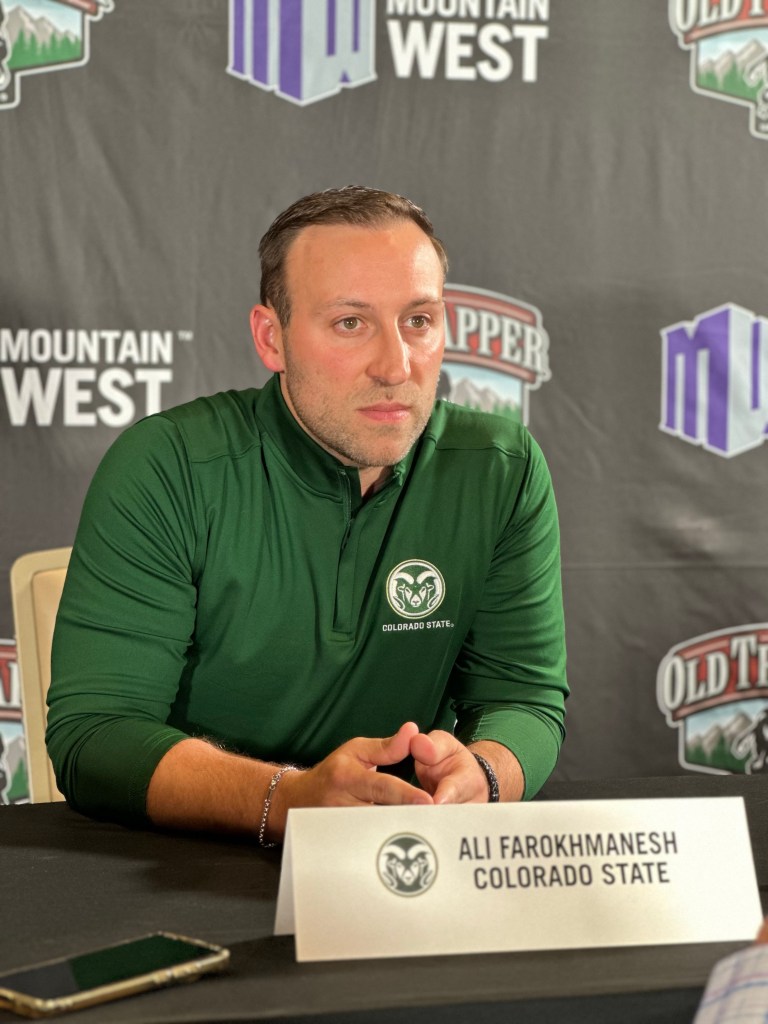
“What’s our identity at this current juncture? In terms of ball-moving and spacing, we’re tough and competitive. We show up to our job every single day with the right attitude as a team.”
He cited specific players to illustrate his standards. Forward Rashaan Mbemba earned praise for a marked transformation: “Rashaan has shown a major growth in terms of taking care of his body, his level of focus and his commitment to detail.” And for newcomer Jace Butler (a transfer from Washington): “He’s competing every day… he will run through a brick door. He has a cool and calm collectiveness about himself. His confidence is sky-high. I had to remind him: this is not Washington.”
In short, Farokhmanesh is staking his program not just on playmakers or one-and-done stars, but on a system of spacing, movement, toughness, and attention to detail. Those three European players? They represent more than an international pipeline — they symbolize a stylistic shift. Playmakers on the wing. Ball movement. Depth.
What does that look like on the floor? Expect a Rams team that:
- Stretches the floor, opens driving lanes, and emphasizes unselfish action.
- Prioritizes consistency: every practice, every possession, every detail.
- Blends new faces with returning leadership, forging chemistry through an identity anchored in competitiveness and spacing.
- Holds individually accountable players like Mbemba and Butler — two very different paths, same standard: effort, growth, and clarity of role.
For Unit 1 Hoop Source readers, the significance is clear: Colorado State isn’t simply reloading — they are re-defining their style in real time. Under Farokhmanesh, the Rams are embracing a blueprint that leans into movement, spacing, toughness, and a commitment to the details that win on the mid-major level. The signs from Media Day are strong — now the floor will tell the story
🏀 Basketball Insider Take | Grand Canyon at Mountain West Media Day
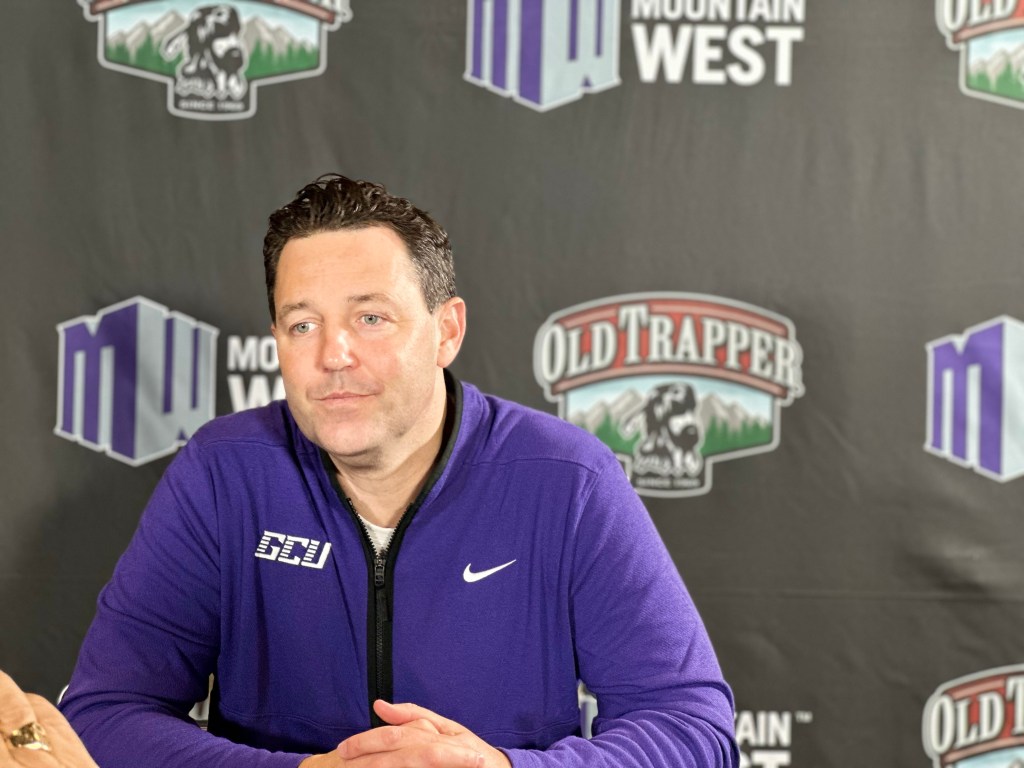
When I caught up with senior guard Jaden Henley and graduate forward Nana Owusu-Anane, the tone was clear — Grand Canyon isn’t easing into its new conference. They’re walking in with purpose, edge, and belief. No arrogance, just confidence from two leaders who’ve bought into Coach Bryce Drew’s system.
That same mindset reflects Drew’s approach to roster building. When asked about recruiting in today’s landscape, Drew didn’t hold back —
“The transfer portal has been good to us,” he said. “I’d love to recruit more freshmen, but in this era, it’s hard to promise them minutes. That’s why we lean heavily on the portal and overseas players who fit what we do.”
It’s a formula that continues to work. Grand Canyon has built a roster full of experienced upperclassmen who understand roles, defend at a high level, and play with the kind of toughness that wins in March.
This is a team with something to prove — and they’re saying it with conviction, not talk.
San Diego State: Dutcher’s Depth, Discipline & The Standard of Consistency
You’ve got to love Brian Dutcher — no fluff, no gimmicks. The San Diego State head coach speaks in straight lines, the way his teams defend. At Mountain West Media Day 2025, he looked confident but grounded, the posture of a man who understands expectation.
The Aztecs enter the season as the preseason No. 1 pick in the Mountain West, and Dutcher didn’t shy away from it.
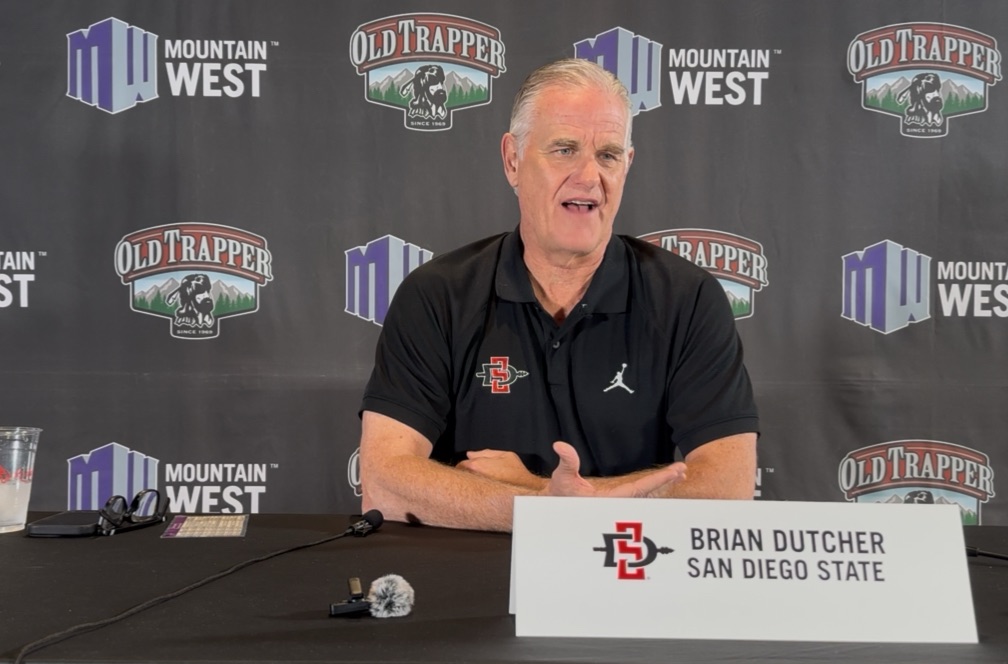
“We’re an older team, more experienced. Expectations are high — and we take great pride in that,” Dutcher said.
He’s earned that posture. San Diego State is one of only 10 programs nationally to appear in at least 12 of the last 16 NCAA Tournaments, and the Aztecs have strung together 19 consecutive winning seasons — a standard of sustained excellence unmatched among mid-major programs.
Keeping the Core Intact
When asked how he keeps his roster together in an era defined by transfer-portal volatility, Dutcher didn’t hesitate:
“We’ve kept about 80 percent of our roster together and only lost one guy. I’d like to believe it’s our culture — but a year from now, that could all change.”
Then he explained why players stay.
“They come back because they feel valued. They know they’re getting better, they’re getting a good education, and they’re being taught to lead. They value those things.”
That clarity of purpose is why his locker room rarely fractures. Seven rotation players return, joined by five newcomers who add shooting depth and defensive length — a formula for sustained balance.
Deepest Aztecs Team Since the Title Run
Asked directly about roster strength, Dutcher smiled and admitted,
“This may be our deepest team since the NCAA title run.”
It’s not just talk. With Jaedon LeDee anchoring the frontcourt and a veteran core that understands defensive rotations instinctively, San Diego State’s identity remains what it’s always been — pressure defense, physical rebounding, and connected basketball.
Building Beyond the Floor
Momentum for the Aztecs isn’t limited to the hardwood. In one of the biggest financial stories of the offseason, Blenders Eyewear founder Chase Fisher pledged $5 million ($1 million per year) to the basketball program — a move that underscores San Diego State’s growing infrastructure and potential entry into the power-conference conversation. Dutcher acknowledged that investments like these, along with evolving revenue-sharing models, reflect a program whose competitive window remains wide open.
For Unit 1 Hoop Source, the takeaway is simple: San Diego State’s stability isn’t an accident — it’s culture, continuity, and care. Dutcher has mastered the balance between holding players accountable and making them feel valued. The result? A team built to handle pressure because it practices poise daily.
Final Take | The Mountain West Standard
From Boise State’s culture of consistency to UNLV’s culture reset, Colorado State’s new identity through continuity, San Diego State’s championship blueprint, and Grand Canyon’s fearless arrival — one message echoed through Mountain West Media Day: this conference is built on discipline, defense, and identity.
The tone across the ballroom wasn’t about hype; it was about substance. Coaches spoke openly about chemistry, player development, and sustaining momentum. Leon Rice of Boise State emphasized “playing together.” Josh Pastner of UNLV focused on “winning the margins.” Ali Farokhmanesh of Colorado State stressed “continuity and spacing.” Brian Dutcher of San Diego State reinforced “experience and pride.” And from Grand Canyon, Bryce Drew’s players carried a confident, competitive edge — a team entering a new conference not to blend in, but to make noise.
Their collective message defines what the Mountain West truly represents: a league that thrives on coaching, culture, and connectivity. Programs here don’t chase the moment — they build for it. Whether it’s defending the glass, executing possessions, or embracing depth, the foundation remains the same: commitment, preparation, and belief.
For Unit 1 Hoop Source, the takeaway from Las Vegas was simple: the Mountain West isn’t following the national narrative — it’s rewriting it. A conference rooted in experience, guided by authenticity, and unified by coaches who value the little things that still matter most in college basketball.
This year’s storylines may differ, but the heartbeat is the same — the Mountain West stands as one of the most competitive, credible, and culture-driven conferences in the nation.
Editorial Disclaimer | Unit 1 Hoop Source
All evaluations, scouting reports, and features published by Unit 1 Hoop Source are based on firsthand observations, verified film review, and trusted sources. Our content reflects authentic, original journalism and is intended to provide accurate, fact-checked insight for players, families, coaches, and evaluators.
© 2025 Kim Muhammad | Unit 1 Hoop Source. All Rights Reserved.
This article and all written content on this platform are protected under U.S. Copyright Law (Title 17, United States Code).
No part of this material may be copied, reproduced, republished, distributed, or used in any form without prior written consent from the author. Violators will be subject to civil and criminal penalties.
For permissions or licensing inquiries, contact: u1hoop@gmail.com
 Unit 1 Hoop Source