There are moments in sports when you can feel the line being crossed—quietly at first, then unmistakably. The recent storm around LSU—where public commentary from a Governor ricocheted through an athletic department and ignited speculation about leadership—was one of those moments. Whether you agreed with the noise or not, the message carried far beyond Baton Rouge: politics is stepping onto the court and trying to call the plays.
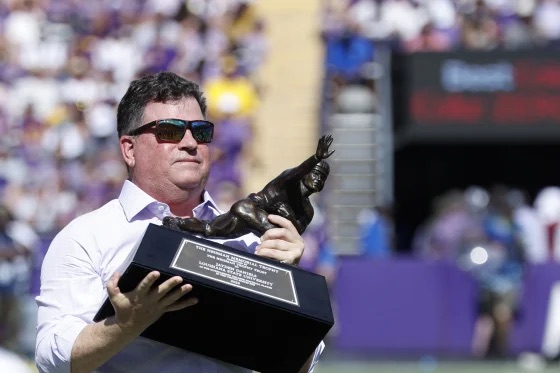
AD Scott Woodward
As a journalist who lives in gyms, hallways, and practice sideline corners—listening to players, to parents, to coaches—I’ve seen what sports is supposed to be. It’s a human space. It’s where a kid from one neighborhood connects with a teammate from another and both learn what it means to belong. It’s discipline, humility, joy, perseverance, and accountability—before it’s ever a headline. It was never built to be a tool for political leverage or a stage for public grandstanding.
“I’m talking about what’s best for a young person I’m responsible for.” — Mack Brown, North Carolina Head Coach (Talking Preps, Charlotte Observer – Oct. 11, 2023)
When coaches speak about their “why,” the best ones ground it in people. Mack Brown’s line above is not a slogan—it’s a compass. The minute decisions are forced by outside agendas—political, financial, or social-media driven—the compass spins. You feel it in locker rooms and team meetings long before the public sees the fallout.
The LSU Spark — But Not the Story
LSU isn’t the point; it’s the spark. Political statements can become pressure, and pressure can become process—even when the facts aren’t fully formed and the season’s work is still unfolding. When public officials with massive platforms weigh in on a coach, an AD, or a president, the scoreboard is no longer the scoreboard. It’s proxy warfare for influence.
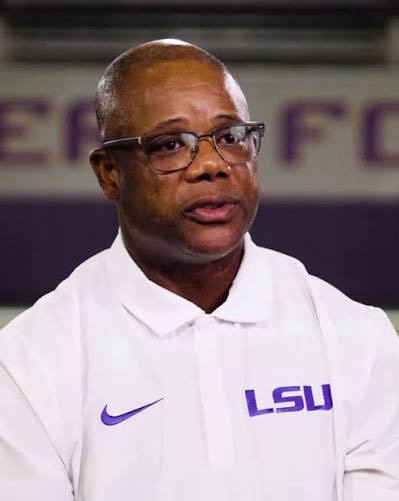
Verge Ausberry as Interim AD
I’m not interested in weaponizing a single school to make a point. I’m interested in the lesson: when the political temperature rises, athletes and coaches pay the price first. Communication turns into posturing. Transparency turns into PR. Decision-making shifts from the weight room to the war room. Somewhere in the middle of that, a 19-year-old is trying to stay focused, go to class, lift, and execute a scouting report.
That’s the cost we don’t measure. Not the press release—the person.
Sports Is a Humanitarian Language
Walk into any arena before tip-off. Watch the pregame routine—the rhythm of ball-handling, the huddle, the quiet prayer, the head nods to family in the stands. Sports is a humanitarian language because it equalizes our differences. You don’t have to vote like me, look like me, or come from where I come from to set a backscreen for me, trust me on the weakside, or celebrate after I dive for a 50/50 ball.
That is what politics—any politics—doesn’t understand about this space. The beauty here is not control; it’s connection. The goal here is not optics; it’s outcomes for young people.
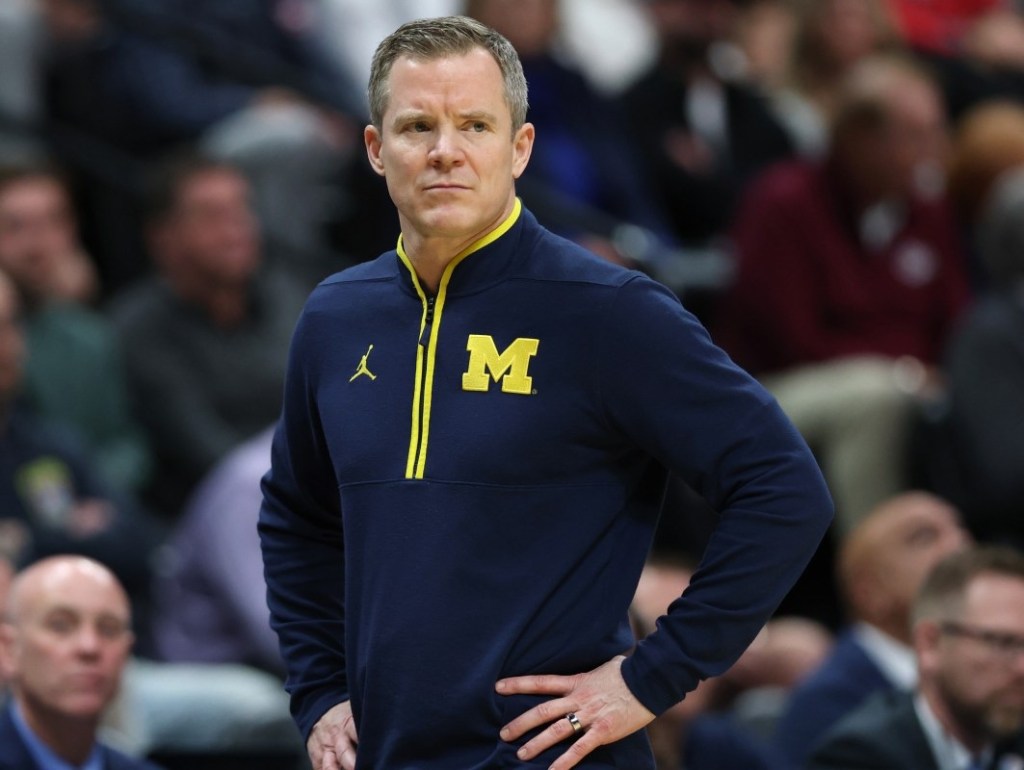
Dusty May
Michigan Head Coach Dusty May offered a window into that coaching ethos when he took over in Ann Arbor:
“By preference, I enjoy the younger players and having continuity, building, growing together, and therefore, the lifelong relationships that I feel like I have with almost every player I’ve ever coached.” — Dusty May (Michigan Introductory Press Conference – Mar. 26, 2024)
That’s not a comment about transfers or trends—it’s a value set. Continuity. Growth. Relationship. All three are fragile under outside interference.
What Political Interference Really Does
• It distorts incentives. Instead of “What helps our athletes develop?” the question becomes, “What plays well in a press conference?”
• It destabilizes leadership. Athletic departments run on trust—between presidents, ADs, coaches, and athletes. Insert politics and you insert suspicion.
• It silences truth-tellers. The safest move becomes the scripted move. The game loses oxygen.
• It harms the pipeline. Families see instability and start asking, “Who’s really running that program?”
Guardrails Are Not the Enemy — Agendas Are
There’s a difference between governance and governing agendas. Rules that safeguard competition and protect athletes are necessary. But agendas that hijack decisions for political theater? That’s when the mission gets lost.
“The integrity of competition is directly threatened when anyone with insider access becomes involved in gambling.” — Greg Sankey, SEC Commissioner (Letter urging NCAA reversal on pro-sports betting for athletes – Oct. 28, 2025)
When governance becomes a stage for political performance, we move from protection to projection. That’s the pivot where athletics stops being the gym and starts becoming the chamber.
College to Pro: The Same Fight in a Bigger Arena
“Sports are supposed to be about joy, about community, about people coming together… The more we turn it into something divisive, the more we lose what makes it special.” — Steve Kerr, Golden State Warriors Head Coach (Post-Game Media – 2020)
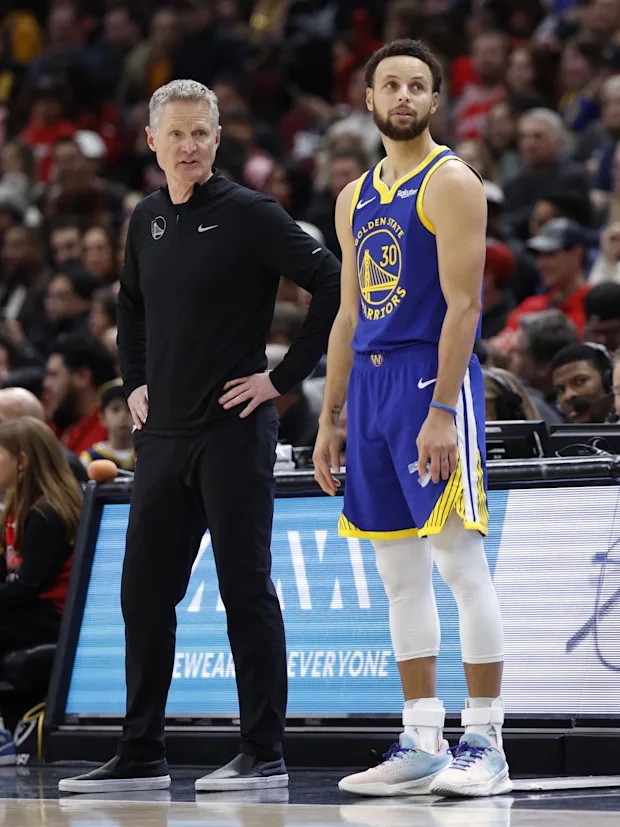
Steve Kerr and Steph Curry
That’s the hinge. Joy. Community. Together. Not soft words—core culture. Pro coaches will tell you the same thing college coaches do: when noise gets weaponized, the locker room pays. And when the locker room pays, the product pays, and the community pays.
This is why the best pro organizations insulate. They invest in people, in mental health, in player development, in culture. They know the difference between pressure to win and pressure to perform for outsiders. One is basketball. The other is theater.
What We Lose If We Ignore This
• Time — time that should be spent developing young people. • Voices — the real heartbeat of programs goes quiet. • Trust — players are not fooled; they know when agendas shift. • Credibility — families stop believing the “family” pitch.
You can’t say “it’s about the players” on Monday and treat them like political collateral on Friday.
Final Take | Unit 1 Hoop Source
I’ve sat in too many hallways after tough losses to believe that politics can fix sports. It can’t. The gym fixes sports. The early-morning sessions. The second chances. The coach who knows how to say the hard thing the right way.
The further we drift into political theater, the more we forget the reason we’re here: the players.
Keep politics out of the gym. Keep agendas out of the locker room. Protect the people.
If we honor that, the game will take care of itself—just like it always has.
EDITORIAL DISCLAIMER
The views expressed in this article are based on firsthand observations, journalistic experience, and credible public statements. This feature is intended to provide perspective on the impact of outside influence on sports culture and athlete welfare. Unit 1 Hoop Source does not endorse any political party or political agenda. Our mission is to protect the integrity of sports and the well-being of athletes.

 Unit 1 Hoop Source