
College basketball has entered a strange new era — one no one fully anticipated, and one the NCAA never truly prepared for. Buried inside the 2025–26 season is a storyline that cuts straight through the heart of the sport’s identity: seven players still competing in Division I basketball who were born in the 1990s. Not 2000. Not 2001. The 1990s.
At first glance, it seems harmless — a curiosity, a trivia question. But the deeper you look, the more it reveals how dramatically college basketball’s structure has shifted. COVID waivers, transfer chaos, medical redshirts, multi-year JUCO journeys, academic exceptions, and the NCAA’s increasingly blurry eligibility standards have created something the sport has never seen before: a college landscape where 26–29-year-old men are matching up against 18-year-old freshmen right out of high school.
This isn’t about blame. It’s about reality.
And the reality is uncomfortable.
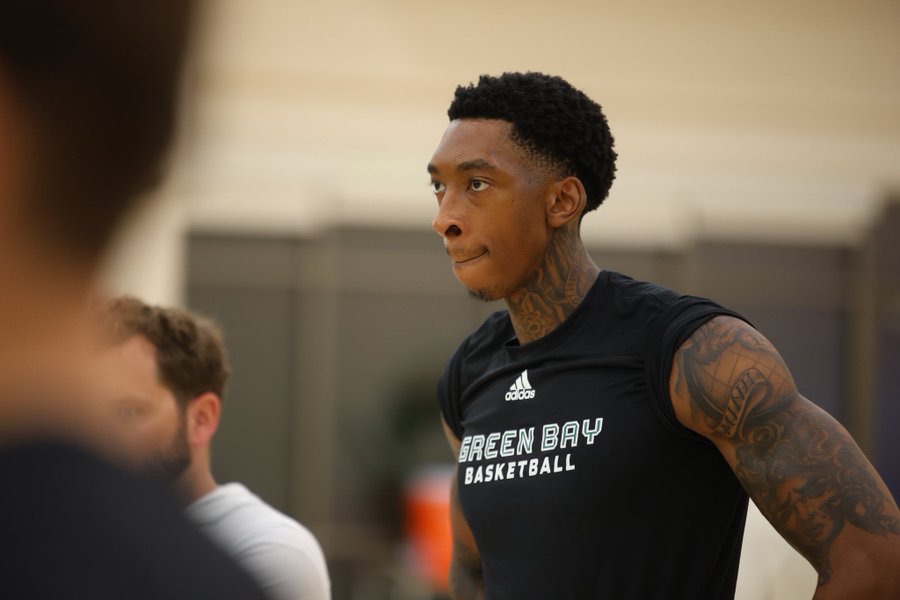
Ramel Bethea (Green Bay), born in 1996, will be 29 years old this season while logging Division I minutes. Brett White II (Oakland), born in 1998, is closer to 30 than to most of the players he’s guarding. Five more — Corey Sands(Charleston Southern), Nginyu Ngala (Northern Illinois), Simeon German (Lamar), Curt Lewis (Southern Miss), and Olajuwon Ibrahim (FIU) — were all born in 1999, making them college seniors on paper… but grown men in actuality.
And this raises the question no one at the NCAA office seems eager to address:
At what point does the age gap become a competitive imbalance?
We aren’t talking about 24-year-olds. That’s normal now.
We’re talking 26, 27, 28, 29.
Players who’ve lived full adult lives.
Players who’ve played in multiple systems, multiple leagues, and in some cases multiple continents.
Players whose strength, bodies, and maturity are simply not comparable to teenagers arriving from AAU circuits.
You can call it “experience.”
You can call it “leadership.”
But you can’t deny what it really is:
a byproduct of loopholes the NCAA never intended to become permanent.
When the COVID year was granted, college basketball gained stability — but it also quietly fractured the developmental timeline that defined the sport for decades. Instead of the traditional four-year arc, players now stretch into six, seven, even eight seasons of eligibility. Some programs have leveraged it strategically, using older players as shortcuts during rebuilds. Others have embraced veterans because, frankly, older players help you win in today’s physical, analytics-driven game.
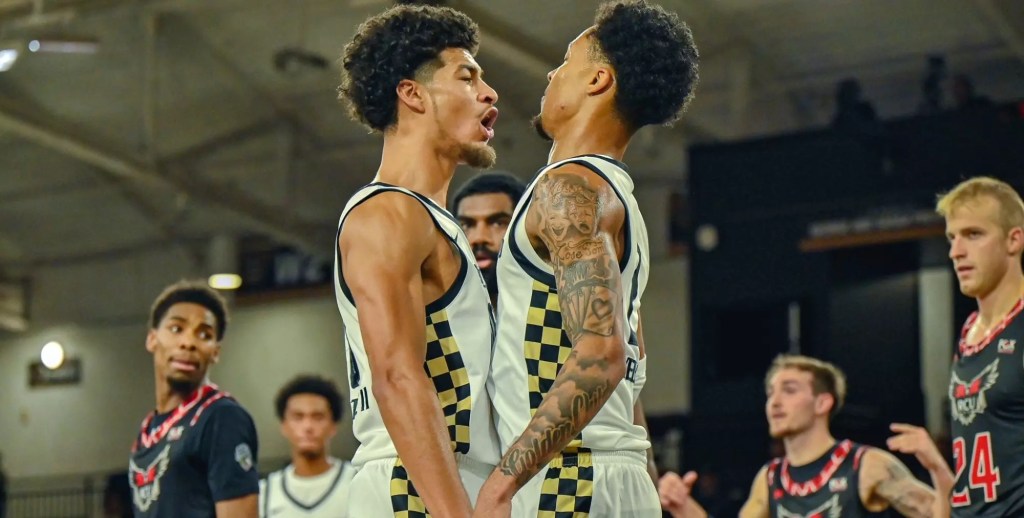
But what happens to the high school prospect who walks into a roster stacked with 23–26-year-olds?
What happens to the 18-year-old whose first assignment is guarding a man who has already played 140 college games?
It feels less like amateur basketball and more like the G League on a college campus.
And that’s the uncomfortable truth:
The age gap is real, it’s growing, and it’s reshaping competition more than people admit.
Yet to be clear — none of this is the fault of the players.
They didn’t bend the rules.
The rules bent around them.
They took every opportunity the system offered, fought through setbacks, survived transfers, waited through injuries, and stayed committed to the game long after most of their peers moved on. In many ways, they should be celebrated for it.
But their presence in 2025–26 exposes the elephant in the room:
College basketball no longer operates within one clean, predictable developmental timeline — and the NCAA has no real plan to fix that.
The “last 90s babies” are not villains.
They are simply the final reminder that the sport, as we knew it, is gone.
Evolving.
Shifting.
Becoming something new — and something not everyone is comfortable with.
The question is not whether they belong.
The question is whether the NCAA still knows what college basketball is supposed to be.
⭐ Player Spotlight — Unit 1 Hoop Source Signature Format
⭐ Ramel Bethea – Green Bay | F | Born 1996
🎯 Oldest player in Division I basketball
🧱 Veteran strength unmatched by most freshmen
🔁 Symbol of the NCAA’s extended-era loopholes
⭐ Brett White II – Oakland | G | Born 1998
🎯 In-game maturity only age can provide
🧠 Reads the floor like a coach
🚀 Near-30-year-old leadership in a college backcourt
⭐ Corey Sands – Charleston Southern | G | Born 1999
🎯 Veteran scorer
🧠 Strong frame and decision-making
🔁 Physical advantage over younger guards
⭐ Nginyu Ngala – Northern Illinois | G/F | Born 1999
🚀 Experienced, athletic slasher
🧱 Built-body wing against teenage matchups
🎯 Veteran versatility
⭐ Simeon German – Lamar | G | Born 1999
🎯 Tough, composed two-way guard
🧠 Age-driven steadiness
🔁 Brings maturity to a roster full of youth
⭐ Curt Lewis – Southern Miss | G | Born 1999
🎯 Only returning name from last year’s “oldest players” list
🚀 Big-frame guard who thrives physically
🔁 Late-career production that boosts winning
⭐ Olajuwon Ibrahim – FIU | F/C | Born 1999
🧱 Rim protector with grown-man strength
🎯 Veteran post defender
🔁 JUCO-developed toughness
FINAL TAKE — Unit 1 Hoop Source
The age gap in college basketball isn’t a sidebar topic — it’s shaping rosters, rotations, recruiting, and the entire competitive fabric of the game. These seven 90s-born players aren’t the problem. They’re simply the byproduct of a system that has changed faster than the rules meant to guide it.
What they represent is bigger than themselves:
a moment where college basketball must decide what it wants to be.
A developmental league?
A semi-pro system?
A place for extended eligibility?
Or something in between?
One era is ending.
Another is emerging.
And the last 90s babies are standing right at the crossroads
Editorial Disclaimer:
All evaluations, scouting reports, and features published by Unit 1 Hoop Source are based on firsthand observations, verified film review, and trusted sources. Our content reflects authentic, original journalism and is intended to provide accurate, fact-checked insight for players, families, coaches, and evaluators.
©2025 Kim Muhammad | Unit 1 Hoop Source. All Rights Reserved.
This article and all written content on this platform are protected under U.S. Copyright Law (Title 17, United States Code).
No part of this material may be copied, reproduced, republished, distributed, or used in any form without prior written consent from the author.
For permissions or licensing inquiries: u1hoop@gmail.com
 Unit 1 Hoop Source