
There was a time when basketball told you everything you needed to know if you simply watched long enough. The ball didn’t lie. Film revealed truth. The best players separated themselves through work, discipline, and consistency. Development followed patience. Opportunity followed preparation.
That time didn’t disappear — but it no longer tells the entire story.
Today’s game demands a different lens. Not because basketball has lost its integrity, but because the forces surrounding it have evolved faster than the way we talk about them. NIL. The transfer portal. Draft declarations and withdrawals. Donor collectives. International pipelines. Player empowerment. Roster churn. Information leverage.
This isn’t noise.
This is the new ecosystem.
And if we’re being honest — truly honest — the question isn’t whether basketball has changed.
The question is whether we’ve adjusted how we watch, evaluate, and understand it.
The Shift Isn’t About Money — It’s About Leverage
NIL didn’t invent ambition. It didn’t invent movement. It didn’t invent ego.
What it did was rearrange leverage.
For decades, leverage lived almost entirely with institutions. Coaches controlled opportunity. Programs controlled exposure. Players waited their turn. Some benefitted. Many didn’t. NIL corrected part of that imbalance — and in doing so, created a marketplace where information, representation, and timing now matter as much as talent.
That’s the uncomfortable truth.
A player who understands the calendar, the market, and his role options now holds more power than ever before. A player who doesn’t? He’s at a disadvantage — not because he can’t play, but because he doesn’t know how the ecosystem works.
This is why you’re seeing players enter the NBA Draft, receive professional feedback, withdraw, and return to college with clarity — and with attention. This isn’t manipulation. It’s navigation. It’s allowed. It’s strategic. And it’s reshaping recruiting conversations in real time.
Is it fair?
It’s fair by rule.
It’s uneven by access.
That distinction matters.
College Basketball Is No Longer a Ladder — It’s a Marketplace
College basketball used to be a linear progression. Now it’s fluid.
High school recruiting still matters — but it’s no longer the primary driver of roster construction. Retention matters. Portal evaluation matters. Fit matters. Timeline matters. NIL structure matters. Development infrastructure matters.
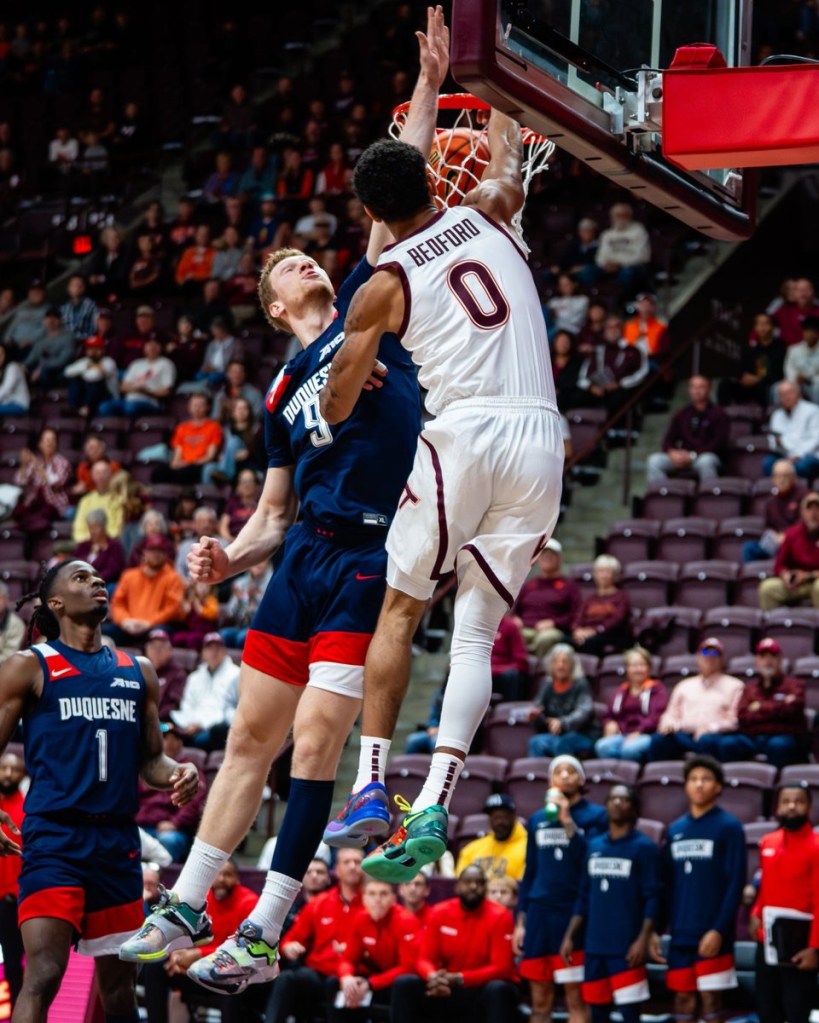
Programs aren’t just building teams anymore.
They’re managing annual roster economies.
And players aren’t just committing to schools.
They’re committing to ecosystems.
Who develops me?
Who defines my role clearly?
Who has stability?
Who understands my long-term trajectory?
That’s not entitlement.
That’s evolution.
The Draft Process Is No Longer a Final Exit — It’s a Feedback Loop
One of the biggest misconceptions in today’s game is that entering the NBA Draft is a declaration of readiness.
Often, it’s a declaration of intent.
Players are using the process to gather information — not to escape development. They’re learning where they stand, what translates, what doesn’t, and what needs work. When done correctly, that feedback loop is healthy.
The issue arises when feedback is misunderstood, rushed, or weaponized by external pressure.
The draft didn’t become softer.
The evaluation became clearer.
And clarity changes behavior.
The Quiet Squeeze on the High School Game
This is the part of the conversation that deserves far more honesty than it receives.
As more players test the professional waters and return to college with clarity, leverage, and experience, an unintended consequence is emerging: the high school recruiting pipeline is being compressed.
Not because high school players lack talent.
But because college programs are under pressure to win now.

A returning draft tester is older, physically developed, professionally evaluated, and easier to project. A portal veteran has already survived a college system. In a marketplace driven by immediacy, readiness often outweighs upside.
That doesn’t make the system broken.
But it does make it tilted.
For high school players, this reality means:
- fewer long-term developmental scholarships
- more “prove-it-early” expectations
- accelerated timelines before physical and emotional maturity fully arrive
The danger isn’t that players are allowed to return to school.
The danger is pretending this doesn’t reshape opportunity downstream.
If we care about the future of the game, we have to acknowledge that developmental responsibility is being pushed earlier — onto families, trainers, and grassroots programs — without always providing the structure to support it.
That’s not an argument against player empowerment.
It’s an argument for intentional balance.
What This Means for Scouting: The Old Tools Are No Longer Enough
If you’re scouting the same way you did ten years ago, you’re behind.
Not because skill evaluation is obsolete — but because skill without context is incomplete.
Today’s evaluator has to ask deeper questions:
- Can this player scale when his usage changes?
- Can he impact winning when he’s not featured?
- Does his game translate when spacing tightens and reads speed up?
- How does he respond when leverage shifts — up or down?
- Is his production role-dependent or professionally translatable?
The modern scout isn’t just evaluating talent.
He’s evaluating sustainability.
Because money accelerates exposure — but it doesn’t guarantee longevity.
Is This Era Helping or Hurting Our Players?
The honest answer is both.
NIL isn’t inherently harmful.
Movement isn’t inherently selfish.
Empowerment isn’t inherently destructive.
What is harmful is a lack of standardized education around finances, contracts, emotional readiness, and long-term planning.
The game didn’t become more dangerous when money entered the room.
It became more complex.
And complexity requires guidance.
How the Game Should Be Viewed Moving Forward
Basketball still rewards the same truths it always has:
- Skill
- Work ethic
- IQ
- Toughness
- Adaptability
But the lens must widen.
We have to watch how players impact games, not just how much.
We have to scout who they are within structure, not just who they are with freedom.
We have to evaluate professional habits alongside production.
Because the players who last are rarely the loudest.
They’re the most adaptable.
Final Take — Unit 1 Hoop Source
Basketball didn’t lose its soul.
It revealed its economy.
And every level of the game — grassroots, collegiate, professional, international — now operates inside that reality. The winners won’t be the ones chasing money or running from adversity. They’ll be the ones who understand fit, timing, and development better than everyone else.
The new question isn’t “Can he play?”
It’s:
Can he evolve without losing himself?
Can he produce without entitlement?
Can he handle leverage without letting it define him?
That’s the modern evaluation standard.
And that’s the lens we owe the next generation — honestly, responsibly, and with the future of the game in mind.
© 2025 Kim Muhammad | Unit 1 Hoop Source. All Rights Reserved.
All evaluations, commentary, and analysis reflect independent, original journalism rooted in firsthand observation, verified information, and a commitment to integrity
 Unit 1 Hoop Source