
On most nights inside the Thomas & Mack Center, the issue isn’t silence.
It’s dispersion.
Fans are scattered across an 18,000-seat arena — pockets of energy separated by empty rows. The game is competitive. The effort is visible. But the environment struggles to feel urgent. Sound doesn’t travel. Momentum doesn’t build.
That visual tells a larger story.
Because UNLV basketball didn’t lose its audience overnight. It lost connection gradually — and the numbers confirm it.
The Numbers Tell the Story First
This isn’t about Las Vegas being too busy.
It isn’t about too many entertainment options.
It isn’t about a city that “doesn’t support college basketball.”

UNLV’s attendance has steadily drifted downward over the last decade — in a way that mirrors program instability rather than market apathy.
Here’s what the official records show:
- 2014–15: 11,757 fans per game
- 2015–16: 11,542
- 2016–17: 10,120
- 2018–19: 6,977
- 2019–20: 6,270
- 2021–22: 4,087
- 2022–23: 4,928
- 2023–24: 5,859
- 2024–25: 4,969
That’s not a one-year dip.
That’s a long-term relationship breakdown between a city and its flagship basketball program.
For perspective, the Thomas & Mack Center historically averaged more than 13,000 fans per game across its first decades. This building has never struggled to draw when belief existed.
When Atmosphere Became a Symptom
Attendance isn’t just a number — it shapes the experience.
A connected crowd of 5,000 can feel intimidating.
A scattered crowd of 5,000 feels indifferent.
Right now, UNLV basketball lives closer to the latter.
Condensing the fan base into a unified lower bowl wouldn’t hide reality. It would maximize energy, improve the television product, and restore a sense of home-court advantage that once defined this program.
Atmosphere isn’t cosmetic.
It’s structural.
The Coaching Timeline: Stability Lost, Identity Reset
To understand why trust eroded, you have to examine how often UNLV basketball reset its identity.
Over the past 20 years, the program has moved through multiple head coaches, each bringing a distinct vision. None lacked credibility. But frequent transition carried a cost that compounded over time.
Lon Kruger (2004–2011)
Kruger stabilized the program following the probation years. UNLV returned to NCAA Tournament relevance and national respectability. The system was clear. Expectations were grounded. But just as stability returned, the program reset again. Progress was real — permanence wasn’t.
Dave Rice (2011–2016)
Rice reignited excitement early. Attendance spiked. The offense played fast. Recruiting buzz returned. But postseason inconsistency eventually strained belief. When excitement isn’t reinforced by sustained results, enthusiasm fades.
Marvin Menzies (2016–2019)
This was a full philosophical reset. New system. New recruiting lanes. A longer developmental timeline. The program asked for patience while delivering limited traction. Attendance declined sharply during this period — not out of apathy, but fatigue.
T.J. Otzelberger (2019–2021)
Otzelberger reintroduced defensive identity and competitiveness. Momentum began to build. Then, another reset. Progress interrupted before it could mature.
Kevin Kruger (2021–2024)
This era carried emotional weight — legacy, familiarity, hope for continuity. There were signs of growth, but the broader pattern persisted. UNLV still couldn’t remain in one lane long enough to fully re-anchor belief.
Individually, these tenures had merit. Collectively, they conditioned the fan base to expect change before progress could stack.
When UNLV Basketball Felt Alive
The contrast fans remember isn’t abstract.
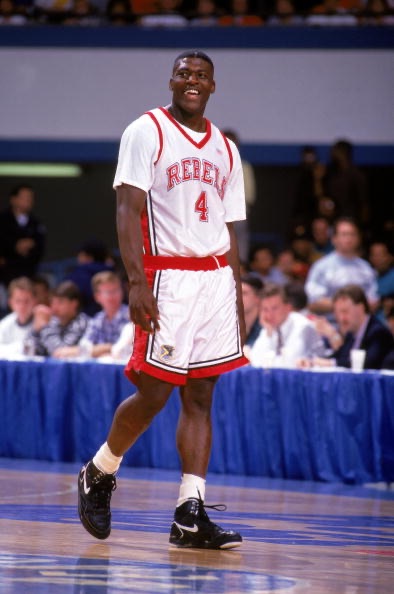
Under Jerry Tarkanian, UNLV basketball felt personal. Players stayed. Fans knew the roster. Identity carried season to season. The program felt protected and unified.
That era isn’t referenced to chase the past.
It’s referenced because it established the emotional baseline: investment, continuity, and connection.
As turnover increased, that connection weakened — gradually, then visibly.
Why Winning Started to Feel Fleeting
UNLV didn’t stop winning entirely.
What changed was the shape of winning.
Success arrived in short bursts instead of sustained arcs. Momentum appeared, then reset. Identity formed, then changed.
From a basketball-insider perspective, that instability erodes belief faster than losing does.
Fans adapt. They wait. They disengage quietly.
That’s not apathy.
That’s experience.
The Younger Generation Gap
Younger fans didn’t inherit UNLV basketball at its peak.
What they’ve grown up watching:
- Coaching turnover
- Roster churn
- Inconsistent relevance
At the same time, Las Vegas embraced professional franchises that feel modern, intentional, and stable.
Loyalty today isn’t inherited.
It’s earned through repetition and clarity.
The Arena Is the Mirror
The Thomas & Mack Center isn’t the problem — it’s the mirror.
Dispersed fans reflect a dispersed identity. Condensing attendance wouldn’t change reality, but it would change belief, energy, and perception.
Players feel it.
Recruits notice it.
Fans respond to it.
Closing: Why This Moment Still Matters
UNLV basketball doesn’t lack history.
It doesn’t lack infrastructure.
It doesn’t lack relevance potential.
What it has lacked is alignment.
With the current administration and the arrival of Josh Pastner, UNLV has an opportunity — not for instant results, but for something more durable: direction with intention.
Pastner brings high-major experience, a defined defensive foundation, and a relationship-driven approach to program building. If given time and institutional patience, this era can begin restoring credibility, continuity, and trust.
UNLV basketball doesn’t need to become what it once was.
It needs to become something believable again.
Because Las Vegas doesn’t reject programs.
It rejects uncertainty.
And when stability becomes the standard, the city responds.
It always has.
Editorial Disclaimer
(Unit 1 Hoop Source)
All evaluations, analysis, and commentary published by Unit 1 Hoop Source are rooted in firsthand observation, verified statistical data, historical research, and conversations with individuals who have institutional knowledge of the programs and subjects discussed.
This article reflects independent journalism and is intended to provide accurate, fact-based context for readers, fans, administrators, and basketball insiders. Opinions expressed are informed by documented trends and long-term coverage and are not intended to discredit any individual, coach, player, or administration.
Unit 1 Hoop Source is committed to integrity, transparency, and authentic storytelling within the basketball landscape.
Copyright & Reuse Policy
© 2026 Kim Muhammad | Unit 1 Hoop Source. All Rights Reserved.
This article and all written content published by Unit 1 Hoop Source are protected under U.S. Copyright Law (Title 17, United States Code).
No part of this material may be copied, reproduced, republished, distributed, or used in any form—digital or physical—without prior written consent from the author. Unauthorized use may result in civil and criminal penalties.
For permissions, licensing, or reprint inquiries:
📧 u1hoop@gmail.com
 Unit 1 Hoop Source