
Las Vegas is one of the most talent-rich basketball cities in the country. High-level prospects pass through its high schools, grassroots circuits, and exposure events every year—many of them seeking opportunity, structure, and a realistic path forward. At the center of that ecosystem sits the College of Southern Nevada, a program with facilities, conference competition, and institutional presence already in place.
What CSN basketball lacks is not potential.
It is alignment.
This article is not written to criticize for the sake of noise. It is written to address a legitimate structural conversation that impacts men’s and women’s basketball, the broader athletic department, and—most importantly—the student-athletes who depend on clarity, opportunity, and access.
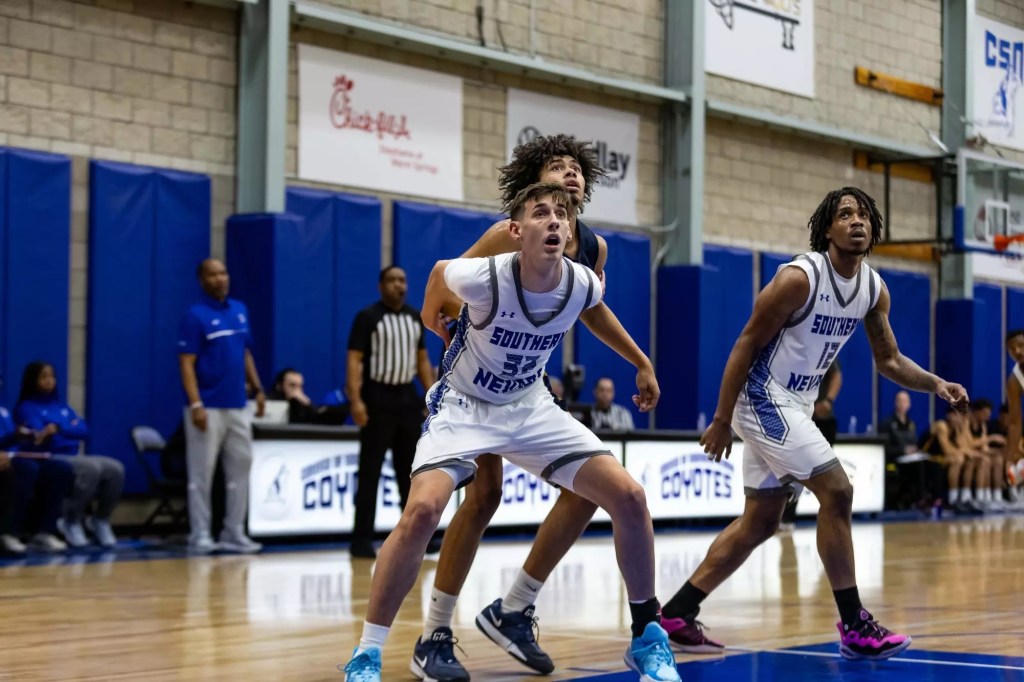
Scholarships Are Not a Luxury — They Are the Entry Point
At the junior college level, scholarships are one of the primary tools used to compete nationally. This is not opinion; it is the operational reality across NJCAA Division I basketball.
Under NJCAA rules, Division I basketball programs are permitted to offer athletic scholarships. Many of the most competitive junior college programs across the country use scholarship aid—sometimes modest, sometimes aggressive—to recruit players from outside their immediate region and to retain talent that would otherwise move on.
CSN currently operates basketball programs without designated athletic scholarships, while baseball and softball are structured differently under the department’s scholarship model. That imbalance matters.
The argument is not that CSN must immediately fund a full scholarship allotment. A realistic and responsible starting point would be a minimum scholarship model—for example, two to three scholarships per roster for men’s and women’s basketball. Even at that level, the impact would be substantial.
Scholarships create recruiting reach. They allow programs to recruit beyond city limits, compete for late-blooming prospects, and offer tangible opportunity to players who are weighing multiple junior college options.
Without them, CSN basketball is recruiting at a structural disadvantage before the first conversation even begins.
“No Housing” Is Not an Excuse — It’s a Known Variable
One of the most common explanations for the absence of basketball scholarships at community colleges is housing. CSN does not offer on-campus housing.
Neither do many community colleges across California.
Yet California junior colleges routinely compete at a high level, recruit nationally, and move players on to four-year programs. They do so by combining scholarship aid, academic support, and external housing solutions through families, apartments, or regional partnerships.
Housing is a challenge. It is not a disqualifier.
If the goal is national competitiveness, housing must be treated as a planning issue, not a justification for stagnation.
Scholarships Alone Don’t Build Programs — Relationships Do
Even if scholarship aid were introduced tomorrow, it would not succeed without coaching accountability and relationship-building.
At the junior college level, relationships are not optional. They are the foundation of recruiting.
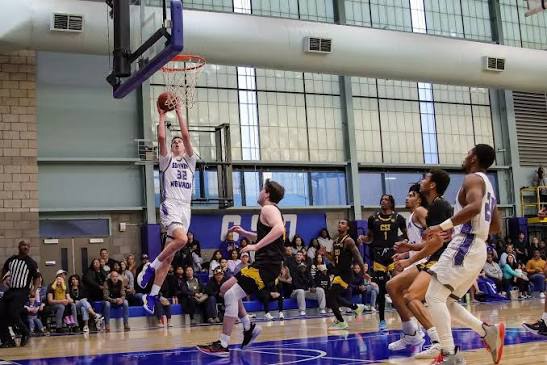
To elevate CSN basketball, the coaching staff must be visible, present, and engaged within:
- Local high school programs
- Grassroots and AAU organizations
- Trainers and development hubs
- Guidance counselors and academic advisors
This means showing up before players are needed. Trust is built through consistency, not transactions.
High-level junior college programs do not recruit solely through highlight tapes and late phone calls. They recruit through daily presence, honest evaluation, and clear communication with the basketball community.
The Missing Piece: An Open-Door Recruiting Culture
One of the most effective—and cost-efficient—initiatives CSN basketball could implement is a structured, free campus and program tour model.
This is not marketing. It is accessibility.
An open-door culture would allow:
- High school teams
- AAU programs
- Prospective student-athletes
- Families and counselors
to walk into CSN and see:
- The facility
- The coaching staff
- The academic structure
- The expectations on and off the court
This transparency reframes CSN not as a fallback option, but as a deliberate choice.
Infrastructure Exists — Activation Is the Issue
CSN already possesses a facility that is appropriate and competitive for the junior college level. It plays in a conference that provides real competition and postseason opportunity.
The infrastructure is not absent.
What is missing is the activation of that infrastructure through:
- Scholarship access
- Consistent recruiting presence
- Community integration
- Unified administrative and coaching alignment
Programs do not become relevant because of buildings alone. They become relevant when systems support vision.
Education Must Be Part of the Pitch — Not an Afterthought
Junior college basketball works best when education is not framed as a backup plan.
CSN has an opportunity to position itself as a program that offers:
- Clear academic pathways
- Transfer preparation
- Structured class scheduling
- Accountability for progress and eligibility
When coaches can clearly articulate the academic experience alongside basketball opportunity, trust increases—with families, high school coaches, and evaluators.
That trust translates directly into recruiting success.
Accountability Is Not Blame — It’s Alignment
This conversation is not about pointing fingers. It is about assigning responsibility.
- Administration must decide whether basketball is meant to compete at a national level.
- Coaching staffs must engage the community consistently and transparently.
- The region must be brought into the process, not left outside of it.
If CSN basketball is to grow into a nationally relevant junior college program, scholarships, relationships, and accountability must move together.
Anything less keeps the program exactly where it is.
Final Thought
Las Vegas continues to produce talent.
The opportunity exists.
The infrastructure is already there.
What remains is a decision.
Editorial Disclaimer (Unit 1 Hoop Source):
All evaluations, analysis, and commentary published by Unit 1 Hoop Source are based on verified research, firsthand observation, and a commitment to transparent, fact-based journalism. This article is intended to inform administrators, coaches, families, and student-athletes while contributing constructively to conversations surrounding collegiate athletics, access, and opportunity.
© 2026 Kim Muhammad | Unit 1 Hoop Source. All Rights Reserved.
This article and all written content on this platform are protected under U.S. Copyright Law (Title 17, United States Code).
No part of this material may be copied, reproduced, republished, distributed, or used in any form without prior written consent from the author. Violators may be subject to civil and criminal penalties.
For permissions or licensing inquiries, contact:u1hoop@gmail.com
 Unit 1 Hoop Source