
Category: Basketball Education
Series: Decoding Basketball Terminology – The Language of Player Evaluation
Introduction
Spend time in serious basketball gyms—whether it’s a college practice, a high-level AAU event, or an NBA scouting session—and one word comes up constantly when coaches evaluate players:
Motor.
You’ll hear phrases like:
“That kid has a high motor.”
“We love his motor.”
“His motor never stops.”
To the casual fan, the word might sound vague. But in evaluation circles, motor is one of the clearest indicators of a player’s competitive character and long-term impact.
It reveals how a player approaches the game when the spotlight isn’t on them—when the ball isn’t in their hands and when the play requires pure effort rather than skill.
Understanding motor helps explain why some players consistently earn minutes, trust, and opportunities—even when they aren’t the most talented athlete on the floor.
Term
Motor
Category
Effort / Energy / Competitive Consistency
What It Means
In basketball, motor refers to a player’s consistent level of effort, energy, and intensity throughout the game.
A player with a high motor:
- runs the floor every possession
- fights for rebounds
- plays aggressive defense
- dives for loose balls
- competes regardless of the score
Motor is about how hard a player plays when nobody has to tell them to play hard.
It shows up in the moments that rarely make highlight reels but consistently impact winning.
Scouting Breakdown
When scouts talk about motor, they’re evaluating behaviors that reveal a player’s competitive engine.
They watch for:
Effort Between Plays
Does the player sprint back on defense after a turnover or jog?
Rebounding Effort
Do they pursue rebounds outside their area or only when it’s convenient?
Defensive Engagement
Do they stay locked in off the ball or drift when they aren’t guarding the action?
Hustle Plays
Do they chase loose balls, deflections, and 50-50 possessions?
Consistency
Does their effort stay the same whether the team is winning, losing, or playing in a quiet gym?
Motor is essentially a player’s energy investment in the game.
And in evaluation settings, it becomes very easy to identify.
Real Basketball Examples
Some of the most impactful players in basketball history built their reputation on motor.
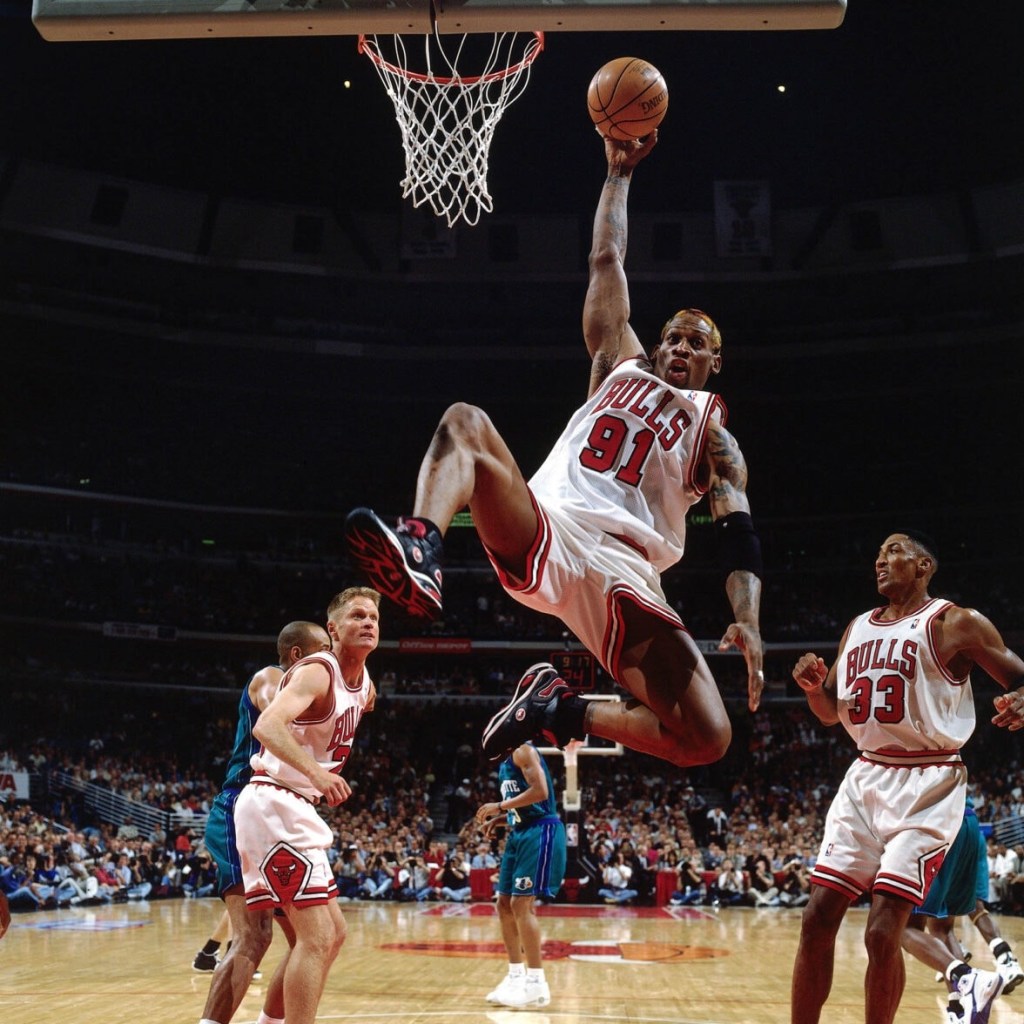
Dennis Rodman
Rodman dominated the rebounding category not because he was the tallest player—but because his motor was relentless. He pursued every miss like it determined the outcome of the game.
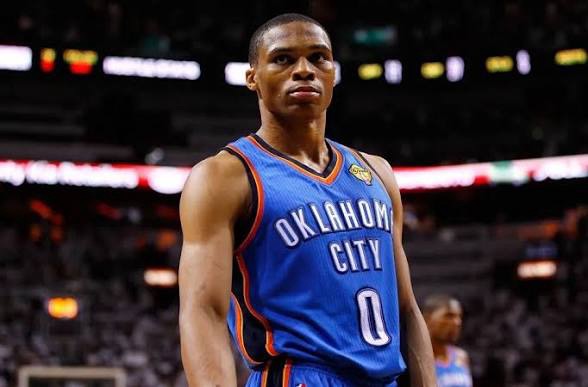
Russell Westbrook
At his peak, Westbrook’s motor was unmatched. His energy attacking the rim, chasing rebounds, and pushing the pace overwhelmed opponents.
Draymond Green
Green’s defensive activity, communication, and hustle plays reflect an elite motor that elevates the entire team.
These players demonstrate a key truth:
Motor can amplify talent.
When skill and effort combine, the impact becomes even greater.
Why It Matters
Motor matters because effort translates at every level of basketball.
Skill levels change as players move from high school to college to professional competition, but effort remains universal.
Players with strong motors:
- earn trust from coaches
- impact the game without scoring
- extend possessions with hustle plays
- raise the team’s energy and competitiveness
In recruiting and scouting situations, when two players have similar skill levels, motor often becomes the deciding factor.
Coaches want players who compete naturally.
For Players and Parents
One of the most important things young athletes should understand is that motor is controllable.
Height may be genetic.
Athleticism may vary.
But effort is always a choice.
Players who want to stand out should ask themselves:
- Do I run the floor every possession?
- Do I chase rebounds outside my area?
- Do I sprint back on defense immediately?
- Do I compete the same way when the gym is empty?
Those habits define motor.
And they are often what coaches notice first.
Key Takeaways
- Motor refers to a player’s consistent effort and energy level.
- High motor players impact the game through hustle and competitiveness.
- Coaches trust players who compete every possession.
- Motor often separates players with similar skill levels.
- Effort is one of the most controllable traits in basketball.
Final Thought
Basketball rewards skill, but it respects effort.
Motor is the invisible force that drives winning plays—the rebounds chased, the defensive rotations made, the loose balls recovered.
It’s the difference between participating in the game and competing in it.
And when evaluators talk about players who consistently help teams win, one word almost always appears in the conversation:
Motor.
At Unit 1 Hoop Source, we don’t chase noise — we study film, define roles, and project truth.
Editorial Disclaimer – Unit 1 Hoop Source
All evaluations, scouting reports, and features published by Unit 1 Hoop Source are based on firsthand observations, verified film review, and trusted sources. Our content reflects authentic, original journalism and is intended to provide accurate, fact-checked insight for players, families, coaches, and evaluators.
© 2026 Kim Muhammad | Unit 1 Hoop Source. All Rights Reserved.
 Unit 1 Hoop Source