
The Double Standard in College Basketball
There’s something happening in college basketball right now that a lot of people see—but don’t always say out loud.
The game is changing.
But more importantly, it’s revealing itself.
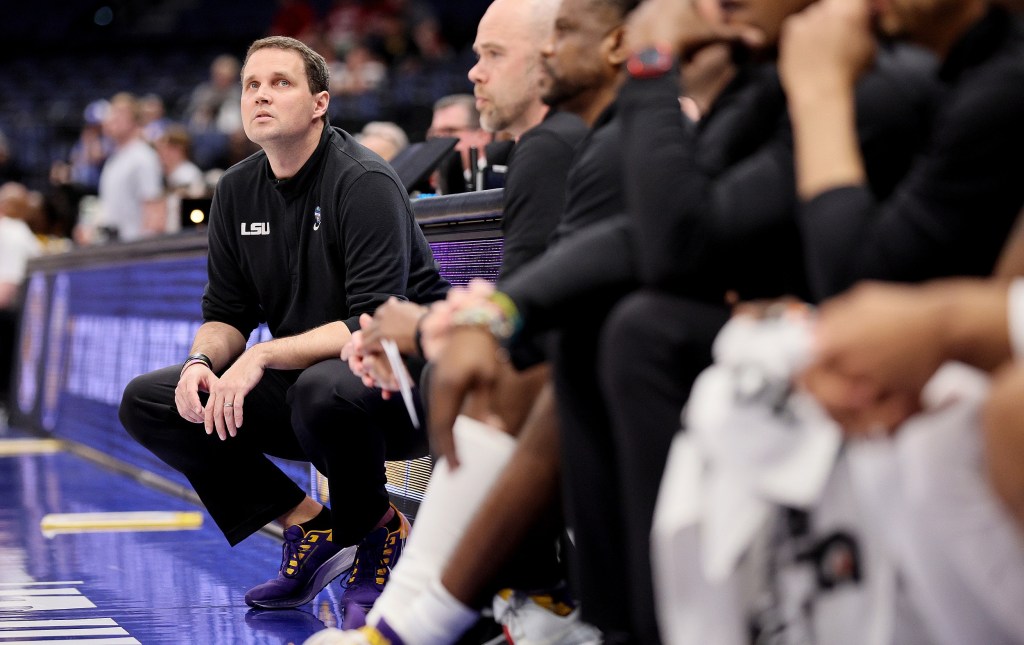
When a coach like Will Wade leaves NC State Wolfpack men’s basketball after building relationships, recruiting players, and laying out a vision—and returns to LSU Tigers men’s basketball—it’s understood.
That move gets framed as opportunity.
As growth.
As part of the business.
And in many ways, it is.

But when players move—when they enter the transfer portal, when they look for better opportunities, when they ask what their value truly is—that same understanding doesn’t always follow.
Now it becomes a conversation about loyalty.
About commitment.
About what’s “wrong” with the game.
And that’s where the disconnect lives.
What We’re Really Watching
College basketball has always had a business side.
That’s not new.
What’s new is that it’s no longer sitting behind closed doors.
Coaches have always operated with freedom:
They take meetings.
They negotiate contracts.
They make decisions based on opportunity, stability, and long-term positioning.
That’s part of the profession.
Now players are beginning to operate with that same level of awareness.
And for some, that’s uncomfortable to watch.
Not because it’s wrong—
But because it’s different from what people were used to.
The Reality Behind Recruitment
Recruitment is built on projection.
Players are recruited based on what they can become, not always what they are in the moment.
They’re sold a vision:
Where they fit.
How they’ll develop.
What their future could look like inside a program.
But once they arrive, reality takes over.
Roles shift.
Rotations change.
Systems don’t always match.
And sometimes, the very coach who recruited them moves on.
That’s the part people don’t always talk about.
So when a player makes a decision based on that reality, it shouldn’t automatically be labeled as disloyalty.
Sometimes, it’s simply a response to a situation that no longer aligns.
Understanding Roles and Value
Not every player enters college basketball with the same role.
There are:
- Immediate impact players
- Role players
- Developmental pieces
- System-specific fits
Programs evaluate this every day.
They adjust.
They recruit over positions.
They make decisions based on what helps them win.
Now players are starting to do the same thing—evaluating where they fit, where they can grow, and where their value is truly understood.
That’s not disruption.
That’s awareness.
Final Thoughts
You can’t fully embrace the business side of college basketball for one group—and reject it for another.
If movement, opportunity, and financial value are accepted realities for coaches, then those same realities have to be understood when players make decisions of their own.
That’s not the game losing its foundation.
That’s the game becoming more honest about what it has always been.
At Unit 1 Hoop Source, we don’t chase noise — we study film, define roles, and project truth.
Editorial Disclaimer (Unit 1 Hoop Source):
All evaluations, scouting reports, and features published by Unit 1 Hoop Source are based on firsthand observations, verified film review, and trusted sources. Our content reflects authentic, original journalism and is intended to provide accurate, fact-checked insight for players, families, coaches, and evaluators.
© 2026 Kim Muhammad | Unit 1 Hoop Source. All Rights Reserved.
This article and all written content on this platform are protected under U.S. Copyright Law (Title 17, United States Code).
No part of this material may be copied, reproduced, republished, distributed, or used in any form without prior written consent from the author. Violators will be subject to civil and criminal penalties.
For permissions or licensing inquiries, contact:u1hoop@gmail.com
 Unit 1 Hoop Source