
There is a quiet misunderstanding in basketball that continues to shape careers before they ever have a chance to fully develop.
It is the belief that higher level always equals better opportunity.
Division I over junior college.
Professional overseas over staying home.
NBA proximity over long-term growth.
On the surface, it makes sense. The game rewards visibility. Exposure opens doors.
But behind the scenes—inside film rooms, practice gyms, and front office conversations—the truth is more complex.
Because the best evaluators in basketball are not asking:
“Where is he playing?”
They are asking:
“Is he developing?”
The NBA Concept vs. Real Basketball Development
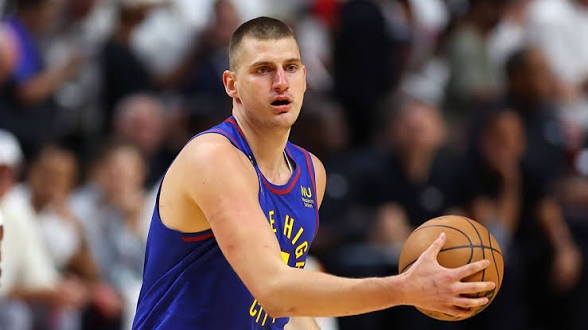
At the highest level, NBA organizations operate with long-term vision. One of the clearest examples of this is what is commonly referred to as the “draft-and-stash” strategy.
An NBA team may draft a player… and deliberately leave him overseas.
Not because he isn’t good enough—but because:
- He needs minutes
- He needs physical development
- He needs time to understand the game at a professional level
The organization controls his rights, but allows the environment to do the work.
It is patience. It is strategy. It is investment.
But here’s what often gets misunderstood:
👉 That concept does not exist structurally at the high school or college level.
There is no system where a college program “stashes” a player overseas.
And yet…
The idea behind it—placing a player in the right environment for development—exists everywhere in the game.
It just looks different.
A Real Example: Development Isn’t Always Linear
Not every path follows a straight line upward.
Some players begin at the highest level… only to realize they are not yet ready to function within it.
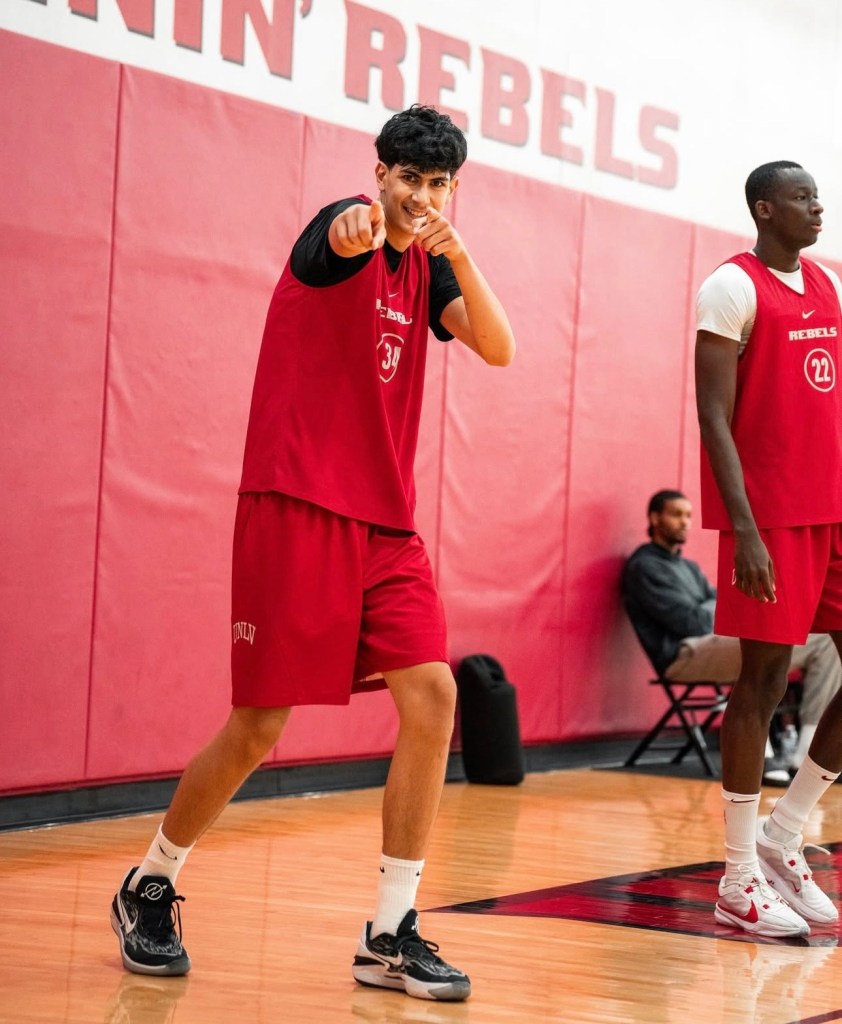
That was the case for Faris Muchabach, a 6’11 frontcourt prospect who began his journey as a walk-on at UNLV.
Size immediately attracts attention. At 6’11, length alone creates intrigue.
But basketball—especially at the Division I level—is not played on measurements alone.
It is played on:
- Timing
- Physical readiness
- Conditioning
- Understanding of role
- Mastery of fundamentals
And at that stage, the reality was clear:
Faris had tools…
but he needed development.
The Gap Between Potential and Readiness
For players in that position, the challenge is rarely talent.
It is translation.
Can you:
- Run the floor consistently at game speed?
- Anchor your position defensively?
- Understand spacing, angles, and rotations?
- Play through contact with physical maturity?
These are not small adjustments. These are foundational elements of the game.
And without them, even the most intriguing physical prospect can struggle to find footing.
This is where many players—and families—make a critical mistake:
They stay in environments where they cannot grow.
The Decision That Changed the Trajectory
Instead of remaining in a situation where development opportunities were limited,
the decision was made to reposition the path.
Faris transitioned to Northern Oklahoma College, entering the junior college level.
To the outside world, that may look like a step down.
To a trained evaluator, it is something else entirely:
👉 A strategic move toward development
At the junior college level, the priorities shift:
- More playing time
- More repetitions
- More room for growth through mistakes
- Greater opportunity to build confidence and identity
And most importantly:
👉 The game slows down enough for learning to take place
What Development Actually Looks Like
At Northern Oklahoma, the progress became visible—not in headlines, but in substance.
- Footwork began to improve
- Conditioning increased
- Movement patterns became more efficient
- Understanding of positional responsibility sharpened
He began to:
- Run the floor with purpose
- Use his size with intention
- Compete with a clearer understanding of his role
This is what real development looks like.
It is not always loud.
It is not always celebrated.
But it is undeniable.
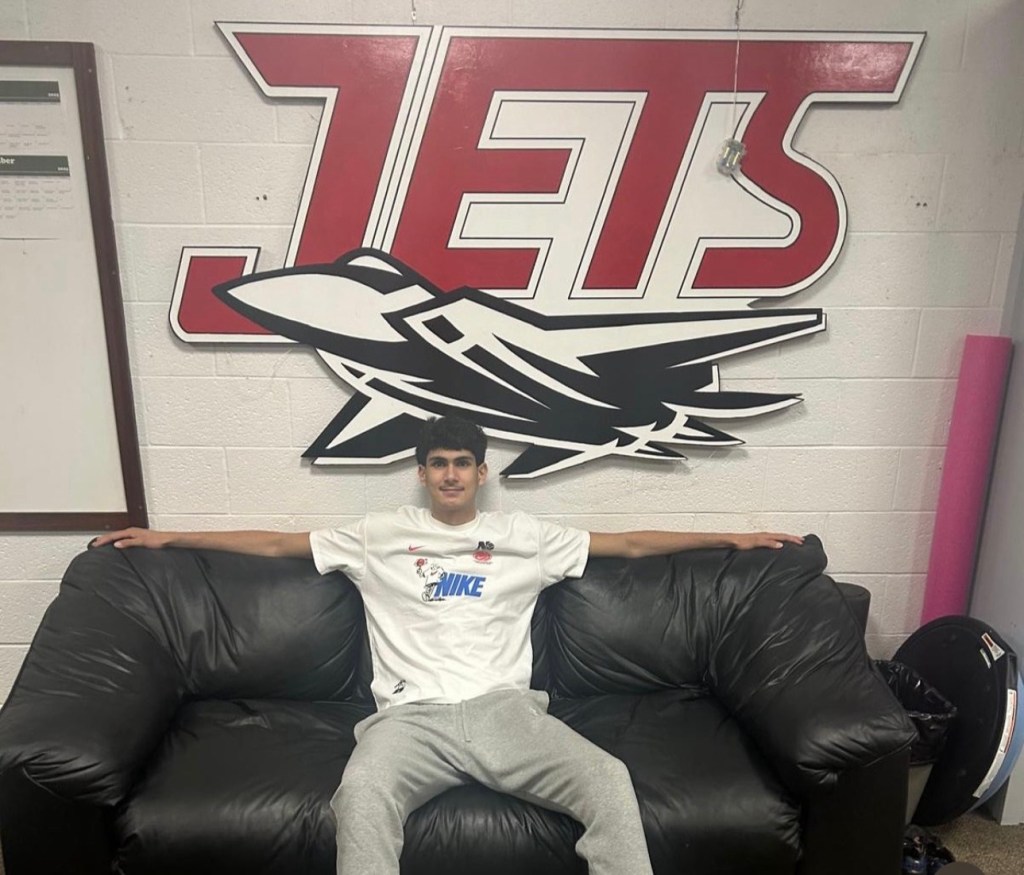
From Raw Prospect to Functional Player
Because of that environment shift, the evaluation changes.
Faris is no longer just:
👉 “a 6’11 player with potential”
He becomes:
👉 “a developing frontcourt player with usable traits and growing impact”
And that distinction matters.
Now, he is drawing attention from Division II programs—programs that value:
- Size
- Length
- Progression
- Coachability
- Role understanding
This is how careers are built.
Not by chasing labels…
but by building substance.
The Lesson Most People Miss
The game does not reward ego.
It rewards readiness.
And readiness is built through:
- Repetition
- Failure
- Adjustment
- Environment
A player placed too high, too early may struggle and plateau.
The same player, placed in the right environment, may develop into something far more valuable over time.
Scout’s Lens: What Actually Matters
From a scouting perspective, this type of journey is not a red flag.
It is often a positive indicator.
Because it shows:
- Self-awareness
- Willingness to develop
- Adaptability
- Growth trajectory
And ultimately:
👉 Projection becomes clearer when development is real
There Is No Perfect Path
Basketball is not linear.
There is no universal roadmap that guarantees success.
There is only:
- The right environment
- At the right time
- For the right player
Some players go Division I and stay.
Some transfer.
Some go JUCO and rebuild.
Some go overseas and develop.
All of it depends on one thing:
👉 Are they getting better?
Final Evaluation
Faris Muchabach’s journey is not about level.
It is about understanding where development actually happens.
In a basketball culture that often prioritizes exposure over substance,
his path serves as a reminder:
A player in the wrong environment will look limited.
The same player in the right environment will look like a prospect.
Development is not always visible to the public.
But to those who study the game closely…
It is everything.
At Unit 1 Hoop Source, we don’t chase noise — we study film, define roles, and project truth.
Editorial Disclaimer (Unit 1 Hoop Source)
All evaluations, scouting insights, and features published by Unit 1 Hoop Source are based on firsthand observation, film study, and informed basketball analysis. This content is intended to provide educational value and insight for players, families, coaches, and decision-makers within the game.
© 2026 Kim Muhammad | Unit 1 Hoop Source. All Rights Reserved.
This article may not be reproduced, distributed, or used in any form without written permission.
For inquiries: u1hoop@gmail.com
 Unit 1 Hoop Source