
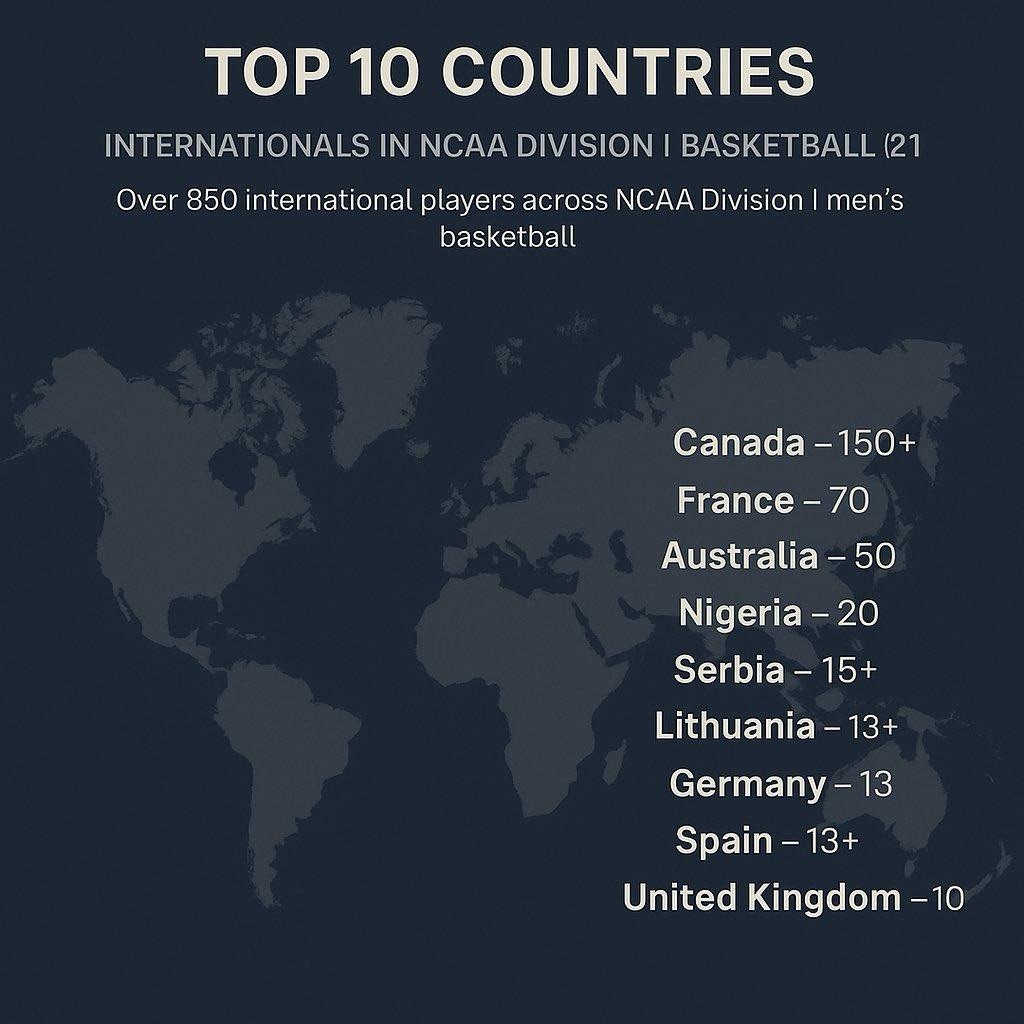
College basketball has quietly become one of the most internationalized levels of the sport in the world.
Over the last decade, NCAA programs have aggressively expanded their recruiting footprints into Europe, Africa, Australia, and other developing basketball regions in search of skilled, experienced, and professionally trained talent. Many of today’s international prospects arrive in the United States already having competed inside advanced club systems, professional environments, and high-level developmental leagues long before stepping onto an NCAA campus.
Now, new guidance distributed by the NCAA surrounding international eligibility requirements could significantly impact how schools recruit, evaluate, and manage those prospects moving forward.
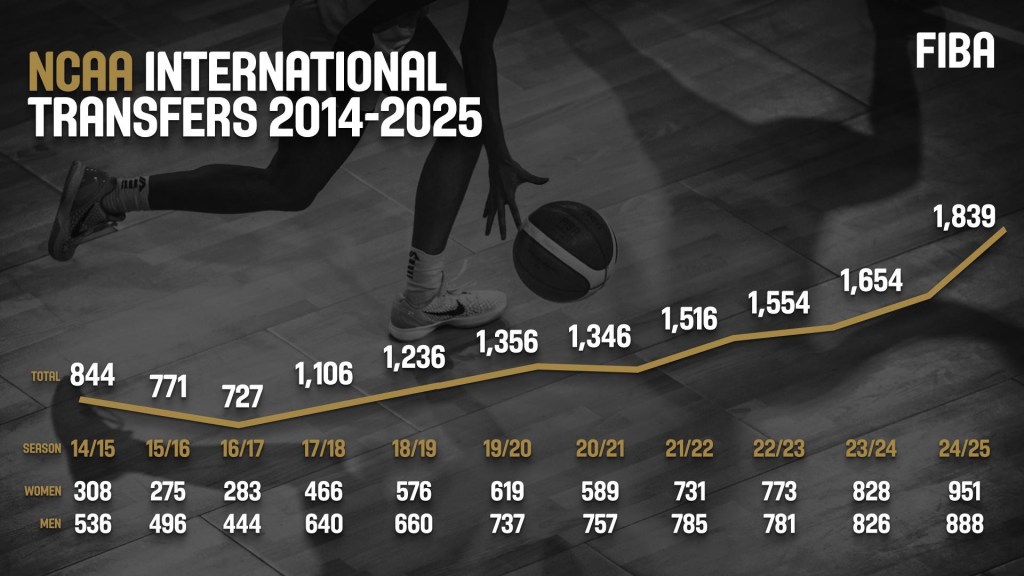
According to reporting obtained by Sports Illustrated, the updated guidance addresses pre-enrollment eligibility standards connected to compensation, professional team involvement, and amateur status for international athletes.
At first glance, this may appear administrative.
In reality, it could reshape portions of the international recruiting pipeline across college basketball.
Why International Basketball Creates NCAA Complexity
The challenge for the NCAA is simple:
International basketball development systems often operate completely differently from the American amateur model.
Across Europe and many other regions globally, elite young prospects are commonly developed inside professional club structures beginning at very early ages. It is not unusual for teenage players to:
- Train with senior professional teams
- Compete in professional-level leagues
- Receive housing, meals, transportation, or educational assistance
- Participate in academy systems connected to professional organizations
- Sign developmental agreements before adulthood
In many countries, this structure is viewed as normal player development.
Inside the NCAA system, however, those same circumstances can create eligibility concerns depending on how compensation, contracts, and professional participation are interpreted.
That is where the situation becomes increasingly complicated.
The Recruiting Landscape May Change Significantly
This guidance may force NCAA programs to become substantially more detailed and compliance-driven when evaluating international prospects.
Moving forward, talent evaluation alone will no longer be enough.
Programs may now need deeper investigations into:
- Professional club affiliations
- Contract history
- Financial benefits received
- Agent relationships
- League classifications
- Appearance records with professional teams
- NIL-related arrangements
- Academy structures tied to professional organizations
For compliance departments, the margin for error becomes smaller.
For coaching staffs, international recruiting may now require closer collaboration with:
- Legal advisors
- FIBA documentation specialists
- International compliance experts
- Certified evaluators
- Trusted scouting networks familiar with overseas systems
The globalization of basketball is accelerating, but so is the complexity surrounding player eligibility.
What This Means for International Players and Families
For international athletes, this guidance creates both opportunity and risk.
Players who properly navigate NCAA eligibility requirements may become even more attractive to college programs because schools will prioritize lower-risk recruitment situations with clean documentation and verified backgrounds.
At the same time, misunderstandings surrounding compensation or professional participation could potentially lead to:
- Delayed eligibility reviews
- Suspensions
- Loss of competition seasons
- Extended reinstatement processes
Many international families simply do not fully understand the NCAA structure because overseas basketball culture functions differently from the American model.
That disconnect has existed for years.
The difference now is that the scrutiny surrounding international pathways appears to be increasing.
The Bigger Picture Behind This Story
This story is ultimately larger than eligibility paperwork.
It reflects the growing collision between American college athletics and the global basketball economy.
The modern recruiting environment now requires schools to understand:
- International development systems
- Professional basketball structures
- Contract language
- Academy pipelines
- Global scouting networks
- NCAA compliance regulations
- NIL implications
Programs capable of understanding those systems at a high level may gain a long-term competitive advantage in international recruiting.
Those that do not may struggle navigating the evolving landscape.
Final Take
International basketball is no longer a secondary recruiting market in college basketball — it is now central to the future of the sport.
The NCAA’s updated international eligibility guidance signals that college basketball is entering a far more sophisticated global era, one where talent evaluation alone is no longer enough. Understanding structure, compliance, development pathways, and professional affiliation may now become just as important as identifying skill and upside.
For coaches, scouts, evaluators, and families, this is not simply a policy update.
It is another sign that the business of basketball continues to evolve far beyond traditional recruiting models.
At Unit 1 Hoop Source, we don’t chase noise — we study film, define roles, and project truth.
Editorial Disclaimer (Unit 1 Hoop Source)
All evaluations, scouting reports, and features published by Unit 1 Hoop Source are based on firsthand observations, verified film review, and trusted sources. Our content reflects authentic, original journalism and is intended to provide accurate, fact-checked insight for players, families, coaches, and evaluators.
© 2026 Kim Muhammad | Unit 1 Hoop Source. All Rights Reserved.
This article and all written content on this platform are protected under U.S. Copyright Law (Title 17, United States Code).
No part of this material may be copied, reproduced, republished, distributed, or used in any form without prior written consent from the author. Violators will be subject to civil and criminal penalties.
For permissions or licensing inquiries, contact: u1hoop@gmail.com
 Unit 1 Hoop Source