
For more independent basketball coverage, scouting notes, player development breakdowns, grassroots evaluations, international prospect reports, and film-based analysis, follow Unit 1 Hoop Source across WordPress, YouTube, Instagram, X, Facebook, and LinkedIn.
The Modern Game Is Telling Us the Truth
In this new era of basketball, the argument does not have to be loud to be true.
Every generation of the game has had its preferred prototype. There was a time when the pure scorer controlled the conversation. There was a time when size alone created value. There was a time when athleticism could push a player into every room before his game was fully defined.
But today’s game is different.
The most important player to a team is not always the player with the highest scoring average. It is not always the player with the loudest highlight. It is not always the player who dominates the ball or carries the biggest reputation entering the gym.
National Basketball Association
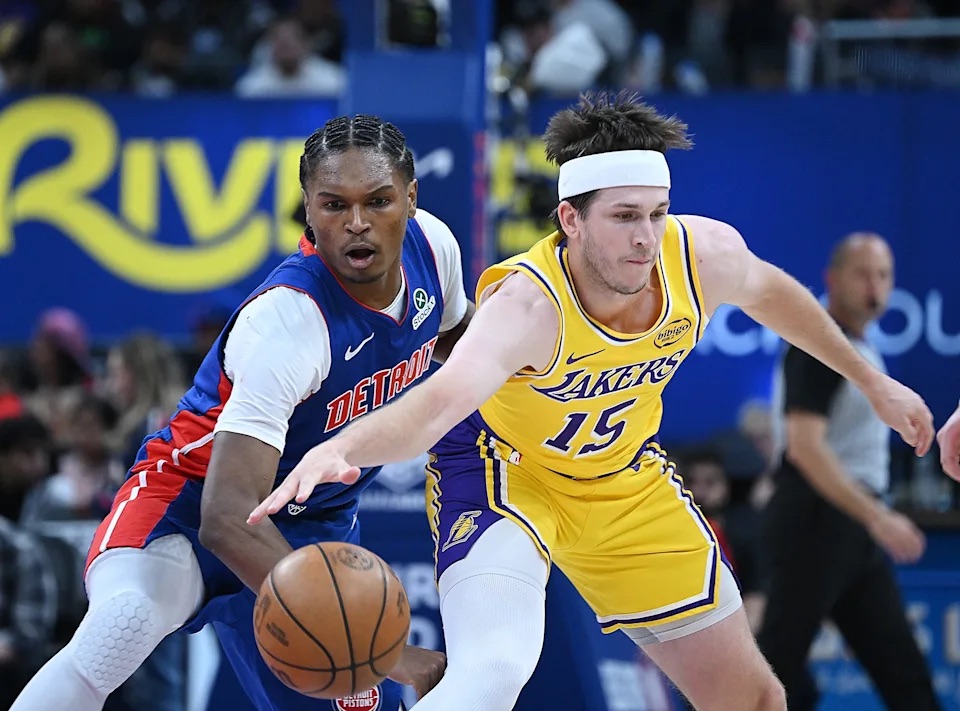
In today’s basketball climate, one of the most important players to any serious team is the two-way player.
The player who can impact the game on both ends of the floor.
The player who can guard, think, communicate, rebound, make decisions, finish possessions, space the floor, and stay trusted when the game becomes physical, fast, and matchup-based.
That is not a debate that needs to be forced. That is the direction of the sport.
Basketball has become more versatile, more positionless, more switch-heavy, and more demanding. Teams are no longer just looking for players who can do one thing well. They are looking for players who can solve multiple problems inside one lineup.
That is where the two-way player separates himself.
The Game Has Changed
Modern basketball is built around spacing, pace, decision-making, defensive versatility, and matchup flexibility.
Offenses are designed to find weak defenders. Ball screens are used to create mismatches. Teams hunt players who cannot guard in space. They force rotations. They make slow decisions visible. They expose players who are one-dimensional.
That is why the two-way player has become so valuable.
A player who can score but cannot defend becomes a target. A player who can defend but cannot function offensively becomes limited. But a player who can do both gives a coach freedom.
He allows a team to change coverages without changing personnel. He can switch onto different positions. He can defend the ball, rotate from the weak side, rebound outside of his area, run the floor, make the extra pass, and still provide scoring value when the game calls for it.
That type of player travels.
Scoring can come and go. Shooting nights can change. Touches can be limited. But defense, toughness, communication, rebounding, versatility, and basketball IQ travel from game to game.
That is why two-way value matters.
Why Two-Way Value Travels
The two-way player does not have to dominate the ball to impact winning.
That is one of the most important parts of this discussion.
Some players need the game to be built around them to be effective. They need volume shots, rhythm touches, and constant offensive freedom. That does not make them bad players, but it does create limits if they are not impacting the game in other areas.
The two-way player gives value even when the ball is not in his hands.
He can guard the best perimeter scorer. He can fight over screens. He can switch onto a bigger player. He can box out. He can make an early rotation. He can communicate the coverage. He can create a deflection. He can finish in transition. He can cut behind the defense. He can make a winning pass without needing credit for the possession.
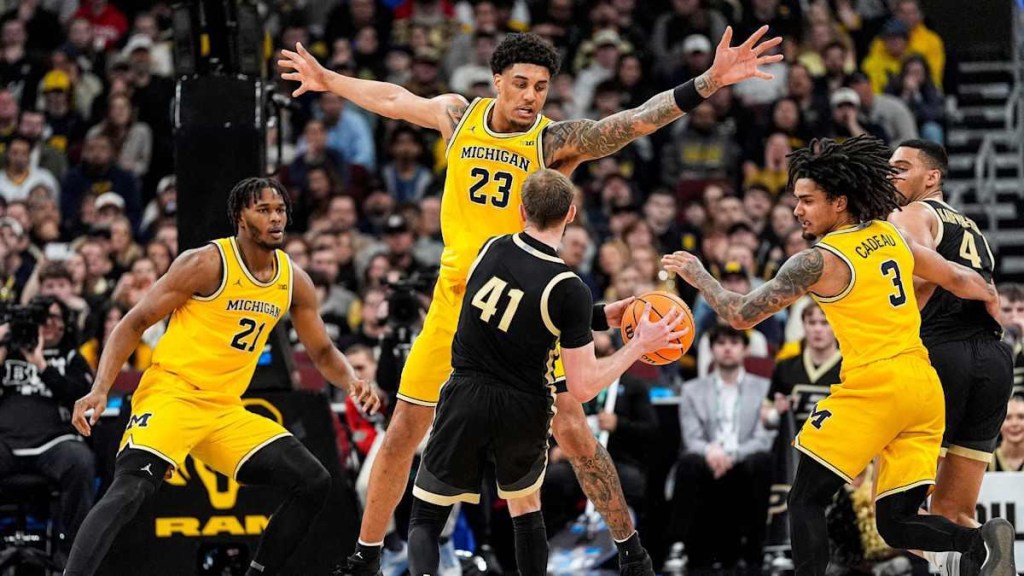
Those plays do not always trend online.
But coaches trust them.
Scouts respect them.
Winning teams need them.
That is why players such as Jrue Holiday, Derrick White, Jaylen Brown, Jayson Tatum, Kawhi Leonard, Jimmy Butler, OG Anunoby, Mikal Bridges, Herb Jones, Anthony Edwards, and Scottie Barnes carry so much value in today’s basketball conversation. They represent different levels of scoring, athleticism, size, and role, but the common theme is clear: they can affect the game on more than one side of the floor.
Some are stars. Some are elite role players. Some are connectors. Some are defensive tone-setters. Some are offensive engines with defensive responsibility.
But the value is tied to the same basketball truth.
The more ways a player can impact the game, the harder he is to remove from the floor.
The NBA Draft Is Showing the Direction
Coming off the NBA Draft, the message continues to be clear: teams are not only drafting talent. They are drafting translation.
Front offices are asking deeper questions.
Can this player stay on the floor in playoff-style matchups?
Can he guard more than one position?
Can he process the game fast enough?
Can he defend without fouling?
Can he make decisions when the ball moves?
Can he impact winning without needing every possession called for him?
Can he fit next to other good players?
That is where the two-way profile becomes important.
A prospect does not have to be perfect. But if he has size, mobility, defensive instincts, toughness, feel, rebounding ability, and enough offensive skill to keep the defense honest, his value rises.
This is why wings, big guards, versatile forwards, and mobile frontcourt players continue to attract attention. The modern game rewards players who can defend in space, finish plays, make quick reads, and avoid becoming a liability on either end.
The draft is not just about who can score in isolation.
It is about who can survive when the game gets faster, smarter, and more physical.
College Basketball Is Moving the Same Way
College basketball is moving in the same direction.
The transfer portal, NIL, older rosters, and faster roster movement have changed how programs build teams. Coaches are no longer only projecting three or four years down the road. Many programs need players who can help immediately.
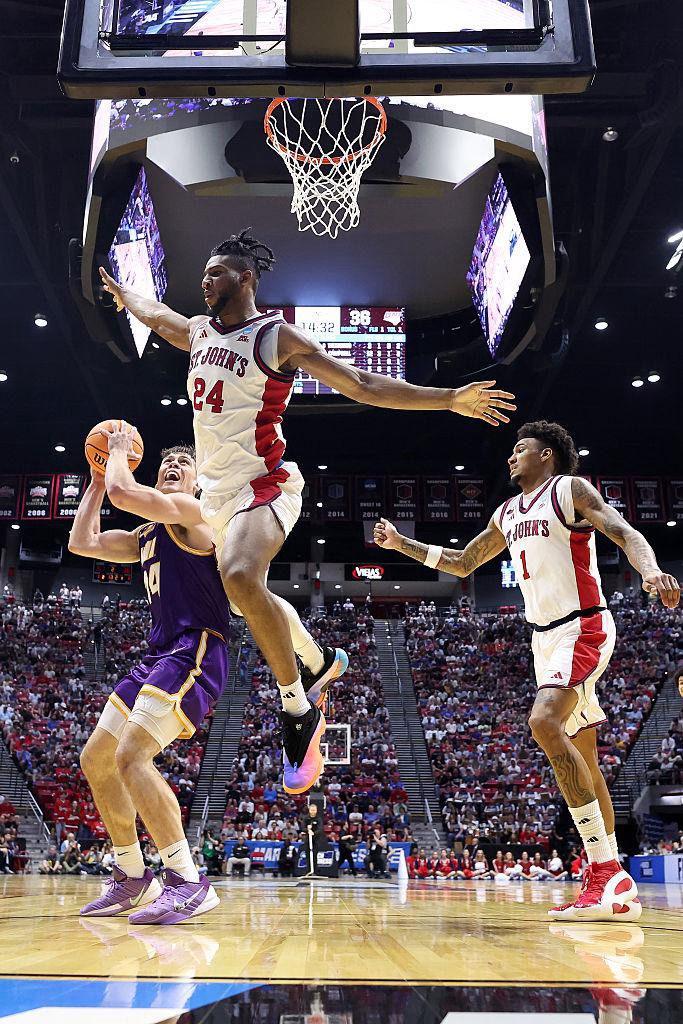
That does not always mean a player has to average 20 points.
Sometimes it means he can guard the opposing team’s best wing. Sometimes it means he can rebound from the guard spot. Sometimes it means he can space the floor, defend multiple actions, understand scouting reports, and bring physical maturity to a roster.
College coaches need players who fit.
They need players who can be trusted.
They need players who can play in different lineups and not break the structure of the team.
That is why two-way value matters even more in the college game now. A player who can defend, communicate, rebound, run the floor, and make open shots gives a coach something real. A player who can only score but cannot guard may become harder to play when the game tightens.
That is the difference between talent and trust.
And in college basketball, trust gets players on the floor.
What Young Players Should Learn From This
For young players, this is one of the most important lessons in today’s game.
Do not build your identity around scoring alone.
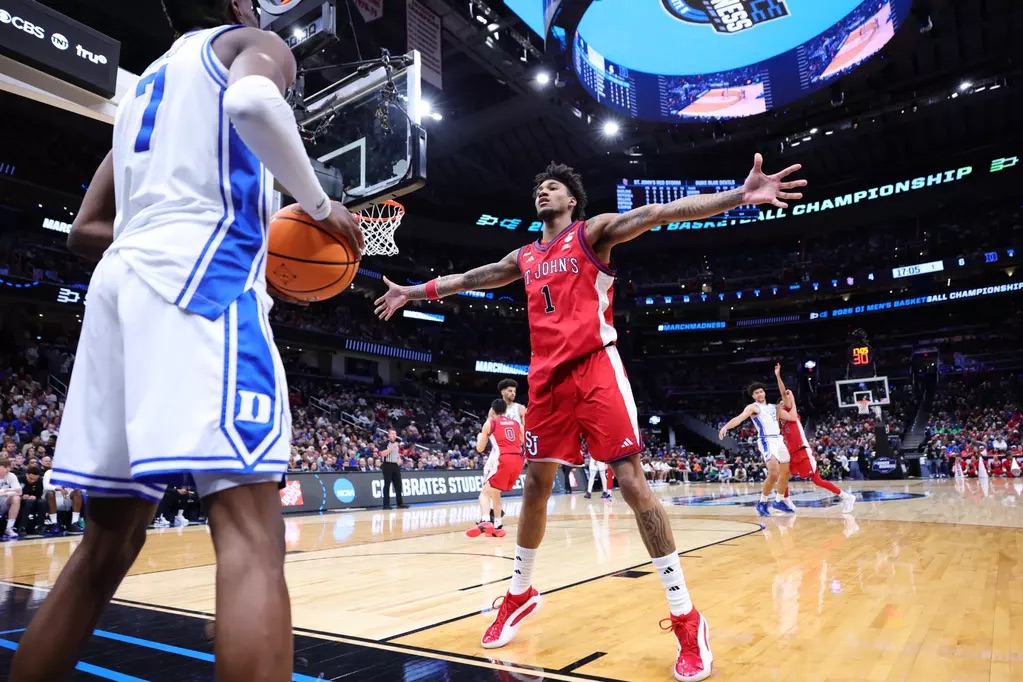
Scoring matters. Shot-making matters. Creation matters. But if that is the only way you believe you can impact a game, your value becomes easier to measure and easier to limit.
St. John’s Athletics
Learn how to defend.
Learn how to communicate.
Learn how to rebound your position.
Learn how to move without the ball.
Learn how to screen.
Learn how to cut.
Learn how to make the extra pass.
Learn how to understand spacing.
Learn how to guard without reaching.
Learn how to finish possessions.
Learn how to be trusted.
That is how a player becomes more valuable.
Every player is not going to be a primary scorer. Every player is not going to be given 20 shots. Every player is not going to have the offense built around him.
But every serious player can learn how to impact winning.
That is where the two-way mindset becomes powerful.
If you can defend and still provide offensive value, you give yourself more pathways. If you can guard multiple positions and make open shots, you become easier to play. If you can rebound, run, communicate, and make good decisions, you become more useful to a team.
The player who can only do one thing has to be elite at that one thing.
The player who can do multiple things gives himself more ways to stay on the floor.
The Difference Between Noise and Impact
The basketball world is full of noise.
Highlights. Rankings. Viral clips. Social media debates. Scoring numbers without context.
But real evaluation has to go deeper.
A player may score 25 points and still hurt his team defensively. Another player may score 12 points and completely change the game with his defense, communication, rebounding, rotations, and decision-making.
That is why the two-way player must be studied with a mature eye.
His value may not always show up first in the box score. It may show up in the matchup he stabilized. The possession he erased. The help rotation he made on time. The extra pass that created the real advantage. The rebound he secured in traffic. The defensive communication that kept the team connected.
Those are winning possessions.
And winning possessions are what serious basketball is built on.
Final Take
The two-way player is becoming one of the most valuable pieces in modern basketball because the game is demanding more from every position.
It is no longer enough to only score.
It is no longer enough to only have size.
It is no longer enough to only be athletic.
The modern game asks players to think, defend, adjust, communicate, space, rebound, and make winning decisions. It asks them to be useful in more than one way. It asks them to survive matchup changes and still bring value when the ball is not in their hands.
That is why the two-way player matters.
He gives a team balance.
He gives a coach trust.
He gives a lineup flexibility.
He gives winning basketball a stronger foundation.
And for young players trying to separate themselves, this should be the message: become more than a scorer. Become more than a highlight. Become a player who can impact the game on both ends.
That is where basketball is going.
That is where value is growing.
And that is the type of player every serious program, coach, and evaluator should be paying closer attention to.
At Unit 1 Hoop Source, we don’t chase noise — we study film, define roles, and project truth.
Editorial Disclaimer
This article is an independent basketball evaluation and opinion-based feature by Unit 1 Hoop Source. All analysis is based on film study, basketball observation, public information, player development trends, and the evolving direction of the game. The purpose of this article is to educate, inform, and provide basketball dialogue around modern player value, development, and team impact. Unit 1 Hoop Source does not claim to represent any NBA team, college program, scouting service, league, school, or player agency.
Copyright
© 2026 Unit 1 Hoop Source. All rights reserved. This article, analysis, language, structure, and original basketball commentary are the intellectual property of Unit 1 Hoop Source and may not be copied, republished, redistributed, or reproduced without proper credit and written permission
 Unit 1 Hoop Source