
Statistics can tell us what a player has done. Scalability helps explain what that player may become.
It is one of the most important concepts in modern basketball evaluation, yet it is rarely discussed outside scouting rooms and front offices. Parents hear coaches and evaluators talk about a player’s upside, potential, or whether his game translates to the next level, but they are seldom told what those conversations actually mean.
At the center of those discussions is scalability.
Scalability asks a simple but important question:
Can a player’s game continue to create value as the level of competition becomes more difficult?
It is not about how many points a player scores today. It is about whether the habits, skills, and decisions that make him successful now will continue to help his team win when the competition becomes faster, stronger, more disciplined, and more talented.

This is where many people misunderstand player evaluation.
A player may average 30 points per game in high school, dominate the basketball, and overwhelm opponents with superior athletic ability. Those numbers may look impressive, but evaluators immediately begin asking deeper questions.
Can he make quick decisions against better defenders?
Can he play without controlling every possession?
Can he defend multiple positions?
Can he impact winning when the ball is not in his hands?
Those questions reveal whether a player’s game is scalable.
A scalable player does not need the offense built around him to remain effective. His value often increases because his skills fit alongside other talented players. He understands spacing, moves without the basketball, makes timely decisions, defends consistently, and embraces the responsibilities required to help a team win.
These are the qualities that travel from one level to the next.
Whether the jump is from high school to college, college to professional basketball, or from one professional league to another, scalable players continue finding ways to contribute because their game is built on fundamentals, decision-making, discipline, and adaptability.
On the other hand, some games struggle to scale.
A player who relies almost entirely on superior athleticism or physical dominance may discover that those advantages disappear as the competition improves. If his overall skill set has not developed, his production often declines because the traits that once separated him no longer create the same advantage.
This is why long-term player development cannot revolve around scoring alone.
Complete basketball players understand how to impact the game in multiple ways.
They defend.
They communicate.
They rebound.
They make winning plays.
They understand timing.
They read defensive rotations.
They make teammates better.
Those qualities become increasingly valuable as the level of competition rises.
What Evaluators Look for When Discussing Scalability

University of Montana
When scouts, coaches, and evaluators discuss scalability, they are often studying qualities such as:
Decision-making under pressure.
Basketball IQ.
Defensive versatility.
Playing effectively without dominating the basketball.
Consistent shooting mechanics.
Adaptability within different offensive and defensive systems.
Role acceptance.
Competitive motor and effort.
Emotional maturity.
Coachability.
These characteristics are difficult to measure with statistics, yet they often determine who succeeds at the next level.
Why Parents Should Understand Scalability
Parents naturally become excited when they see impressive scoring performances, but recruiting is rarely based on points alone.
College coaches and professional organizations are projecting future success, not simply rewarding present production.
The conversation inside evaluation rooms is often much different than the conversation taking place in the stands.
Instead of asking,
“How many points did he score?”
Evaluators are asking,
“Will the way he plays today continue helping a team win against better competition?”
That is scalability.
It helps explain why one player averaging 12 points may receive greater interest than another averaging 28.
The difference is not always production.
The difference is projection.
Why This Matters
Understanding scalability changes the way basketball is viewed.
It shifts the conversation away from statistics and toward sustainable habits, decision-making, versatility, and long-term growth. It reminds players that development is about building a complete game instead of chasing numbers, and it helps parents better understand how coaches and evaluators project future success.
The higher the level of basketball becomes, the more valuable scalable skills become.
The players who continue advancing are often those whose games continue creating value regardless of the system, teammates, or level of competition.
That is the true meaning of scalability.
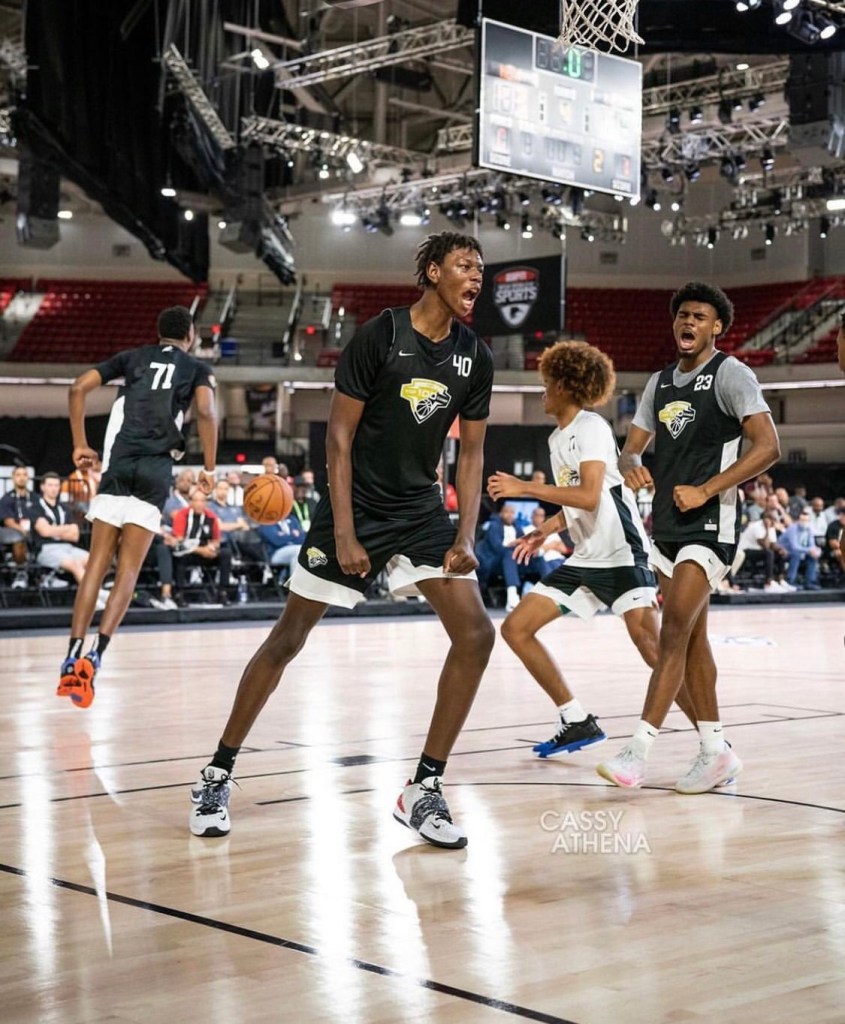
NBPA Top 100
At Unit 1 Hoop Source, we believe basketball education begins with understanding the language used by coaches, scouts, evaluators, and decision-makers. The more players and families understand these concepts, the better prepared they become to develop with purpose, evaluate the game with greater clarity, and recognize the qualities that truly translate from one level of basketball to the next.
Editorial Disclaimer
The analysis and opinions expressed in this article are based on independent basketball study, player evaluation, film observation, and publicly available information. This content is intended to educate players, parents, coaches, and basketball enthusiasts by providing context and insight into the language and principles of the game. Unit 1 Hoop Source remains committed to accuracy, fairness, and responsible basketball journalism.
Copyright
© 2026 Unit 1 Hoop Source. All Rights Reserved.
This article may not be reproduced, republished, distributed, or transmitted in whole or in part without prior written permission from Unit 1 Hoop Source. Proper attribution is required when referencing or quoting excerpts from this publication.
 Unit 1 Hoop Source